




Philadelphia
Interior Design Fee Variation Template: Earlier Opening
A fee variation an interior design studio sends when a commercial client changes the schedule mid-project, here a retailer opening its flagship store six weeks early: what changed and who asked, the effect on design fee, fit-out budget and risk, the acceleration priced line by line with optional items, what stays as agreed, the option of keeping the original date and the signature needed.
Make it yours, in seconds
Every template is a starting point. Drag to shift colour, typography and layout — the live preview updates as you move.
Move the dots to shift colour, typography and layout. The preview updates live.
Get more from every document
Price an accelerated store opening and get the client to a yes or no before the deadline. Added fees, fit-out costs, schedule risk and a decision date sit together on one page.
Get a yes without leaving the page
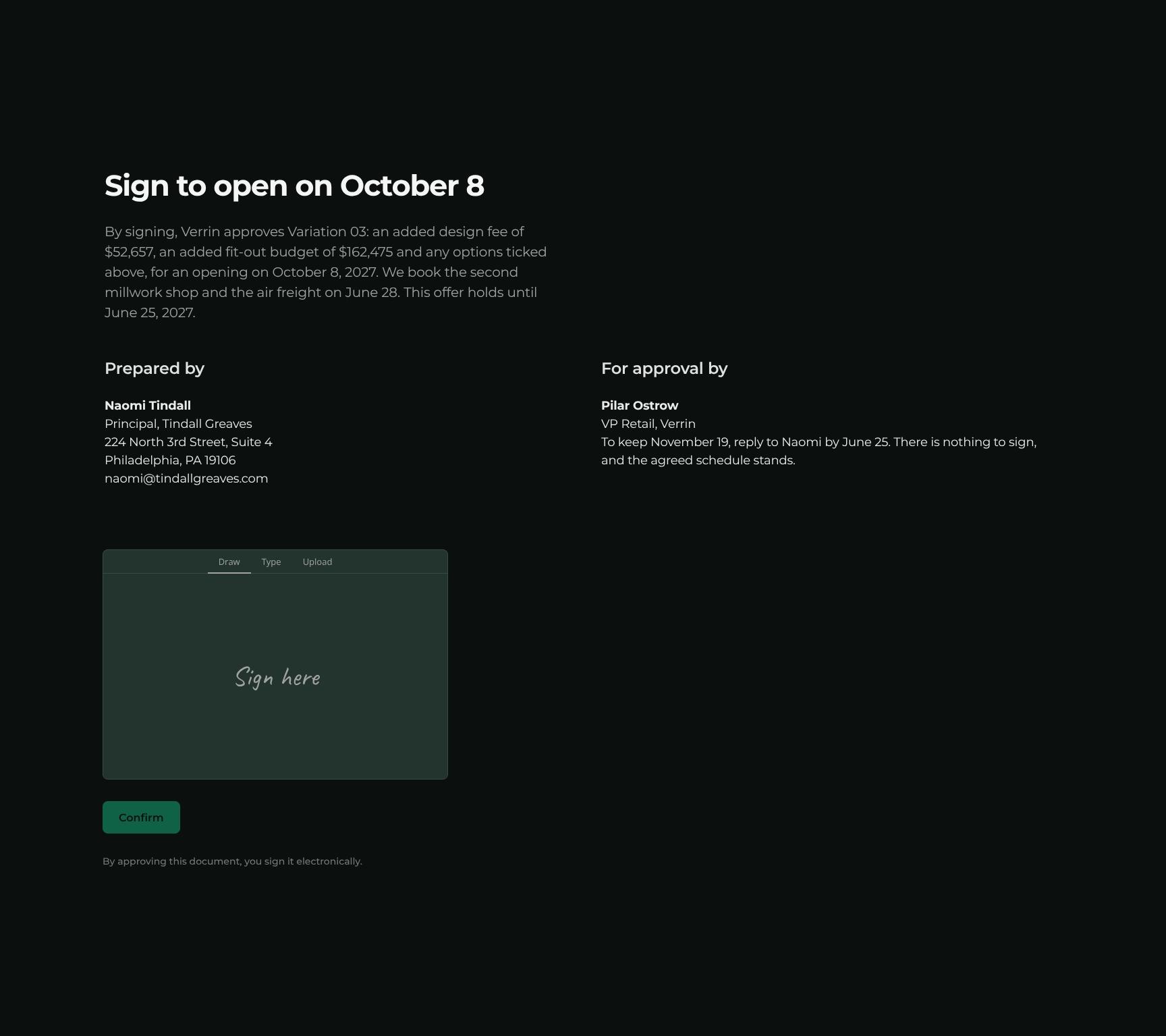
Your client reads the scope, checks the price, and signs at the agreement section. No PDF, no printing, no chasing.
Build proposals from blocks you trust
Drop in a pricing table, steps timeline, or FAQ accordion, then save your best hero to reuse on the next pitch.
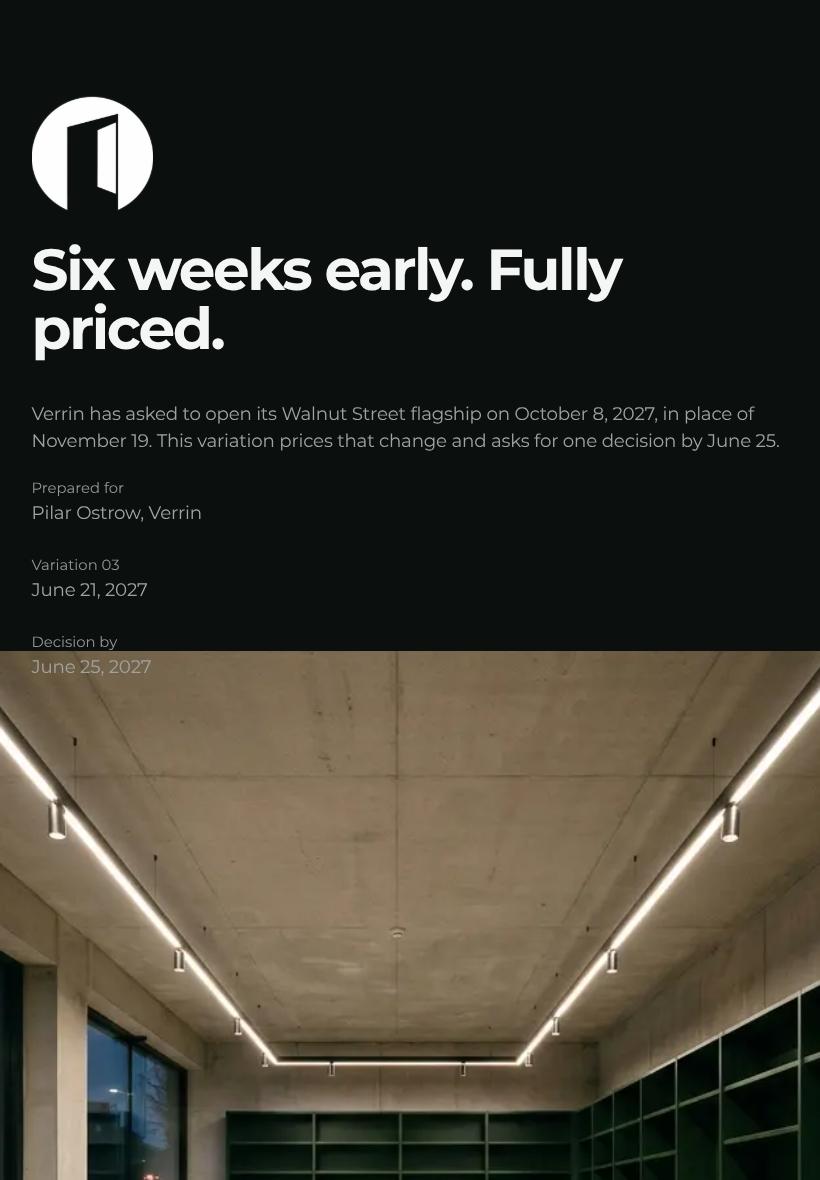
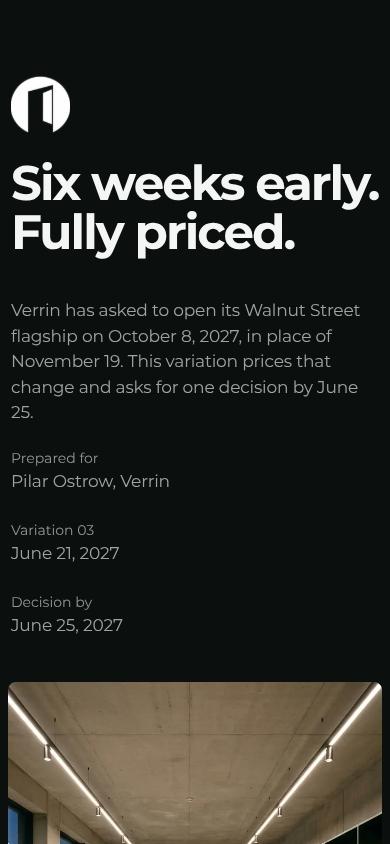
Your pitch looks right on any phone
Clients open your proposal between meetings. The hero, pricing, and steps reflow cleanly on desktop, tablet, and mobile.

See which section sells the deal
Heatmaps show if they lingered on pricing, and session replays let you call while the proposal is fresh in their mind.
Know the moment they open it
You get a ping when the client views, comments on a price line, or signs, so your follow-up lands on time.
Write the proposal together, live
Your designer tweaks the hero while your producer updates the pricing and steps, all in the same document.
See how every part fits
The document opens with the date change and its deadline, moves through the numbers and the risk, and closes with the decision and a signature. Keep, drop, or reorder anything to match your project.
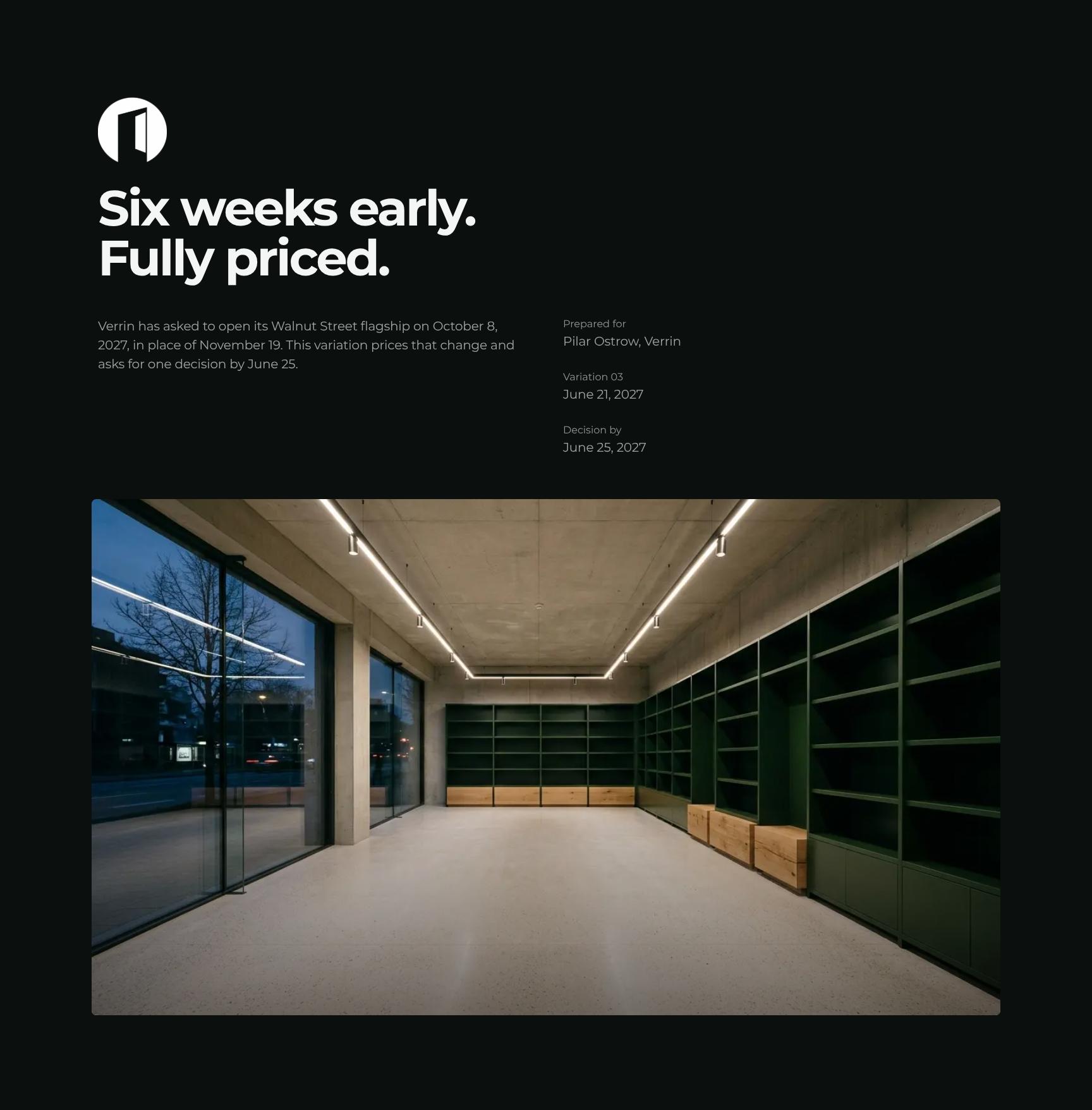
Accelerated Opening Cover with Decision Deadline
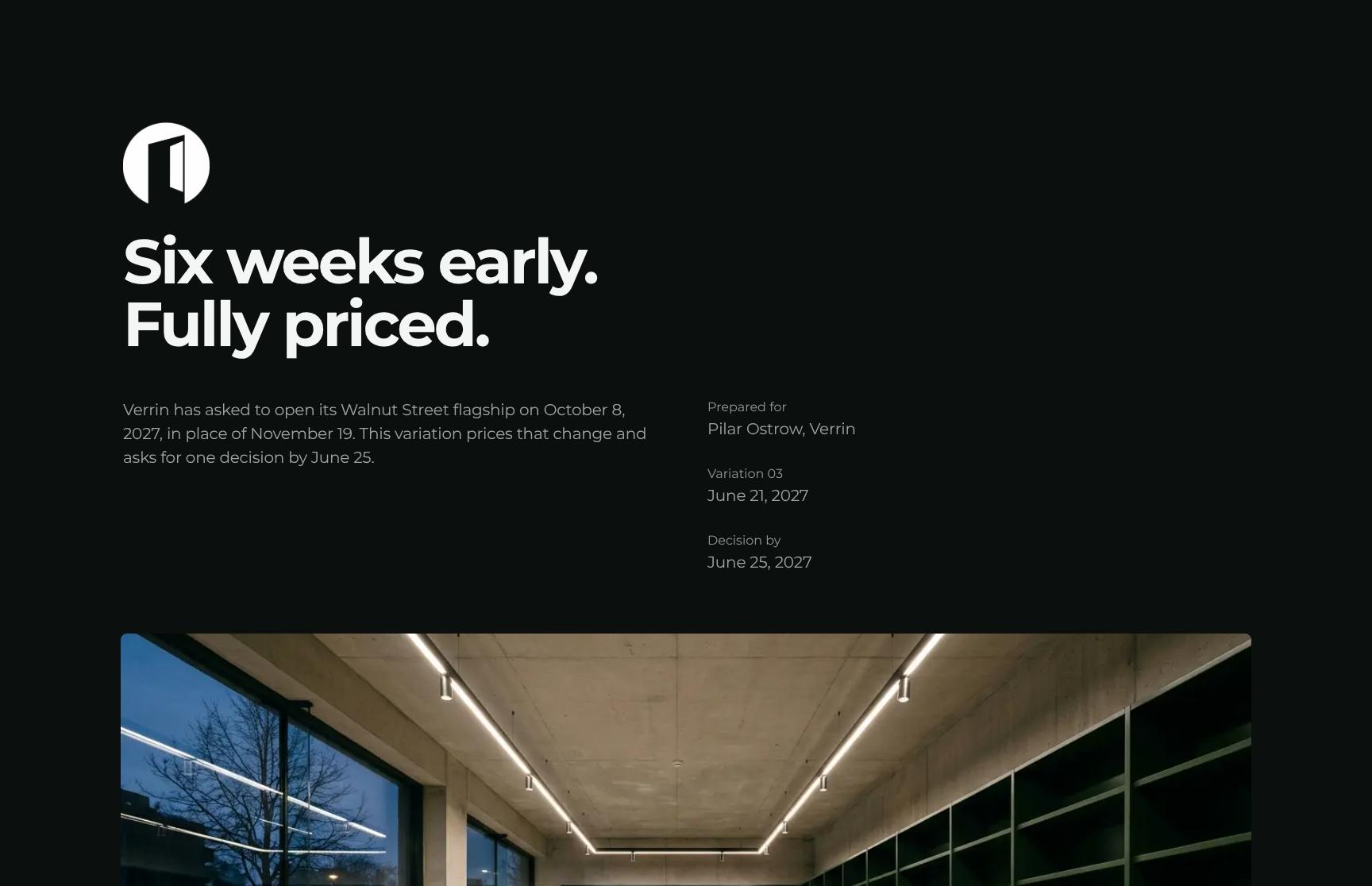
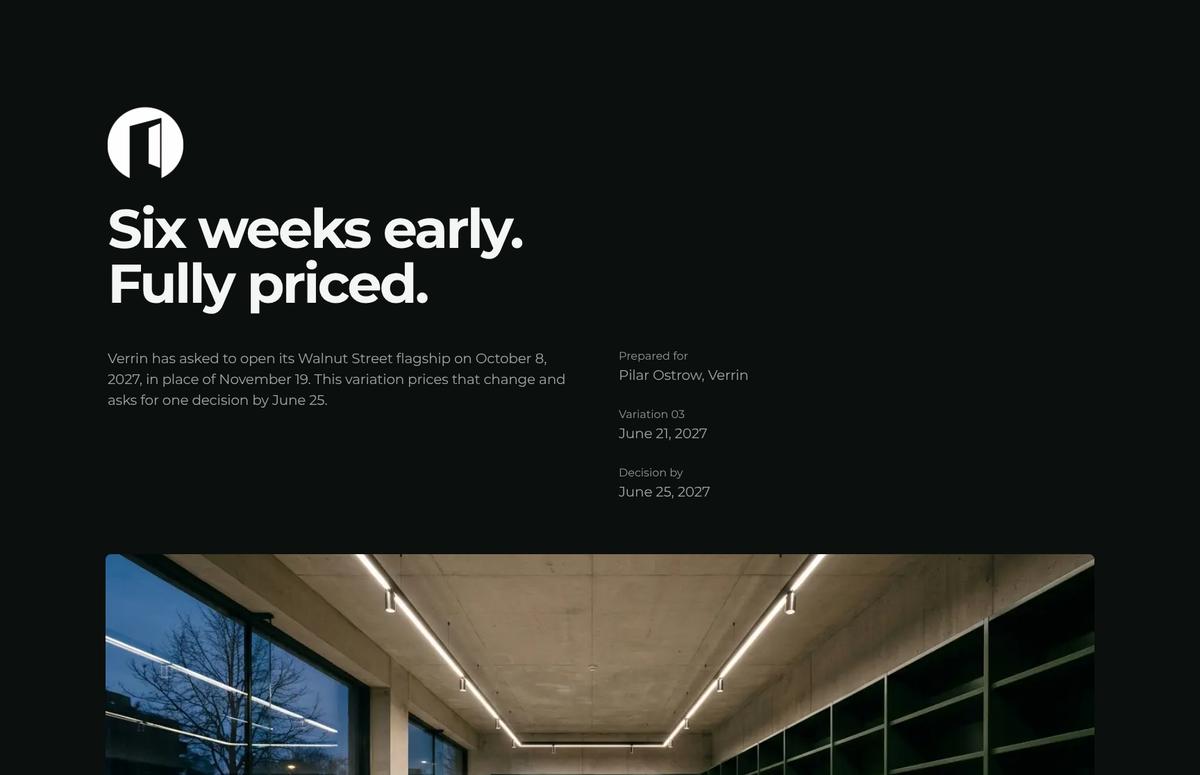
A bold cover stating the headline: opening the Walnut Street flagship on October 8, 2027 instead of November 19, fully priced, with one decision due by June 25. Clients grasp the ask instantly.
Change Summary: Opening Date Moved Forward Six Weeks
Explains what changed and why: the client's June 15 request to open earlier and trade the full holiday quarter. Gives context and a clear paper trail for the variation.
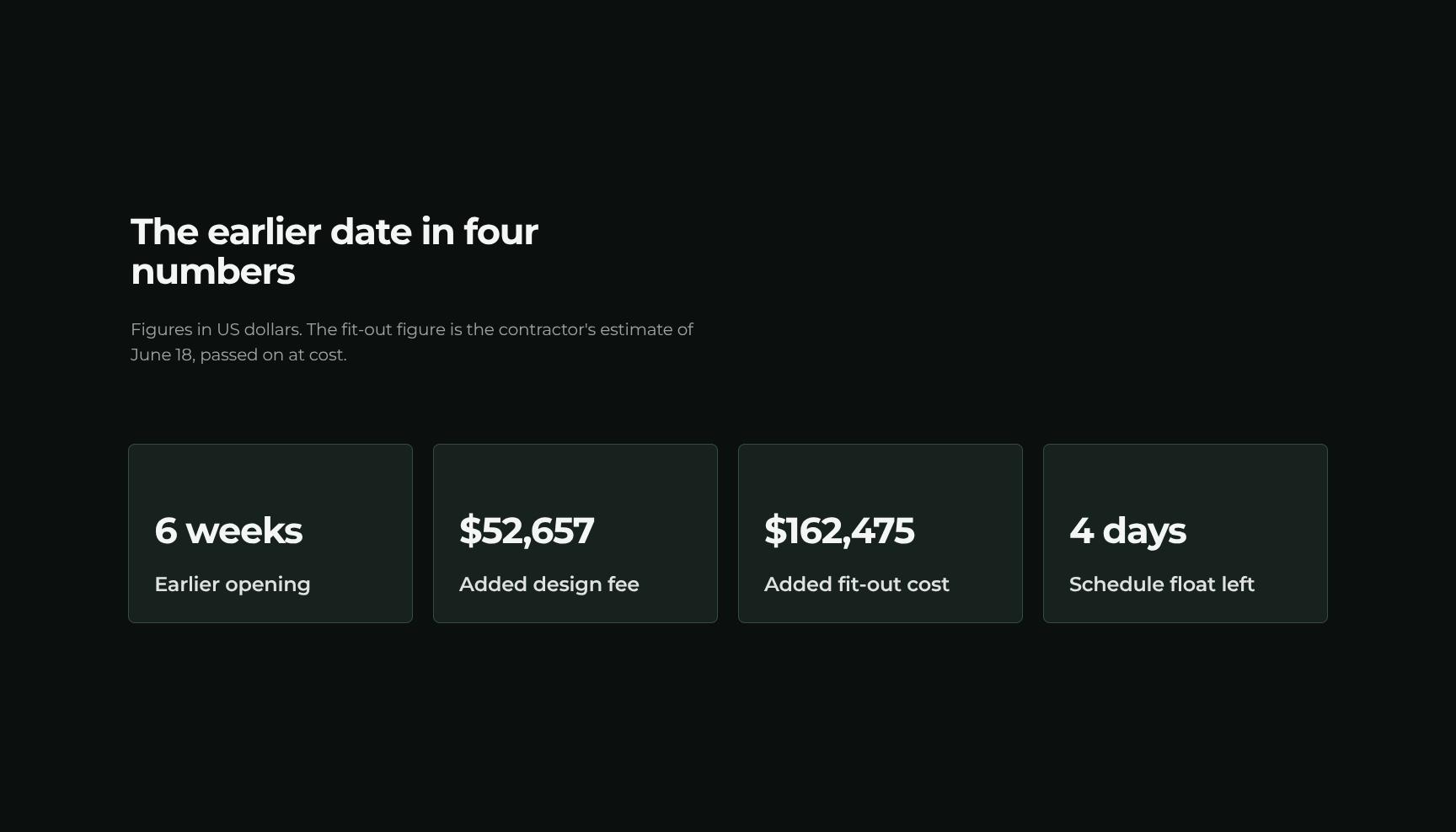
Variation Impact Snapshot: Key Numbers at a Glance
Four headline figures in US dollars showing the effect of the earlier date, including the contractor's fit-out estimate passed on at cost. Decision-makers see the scale of the change fast.
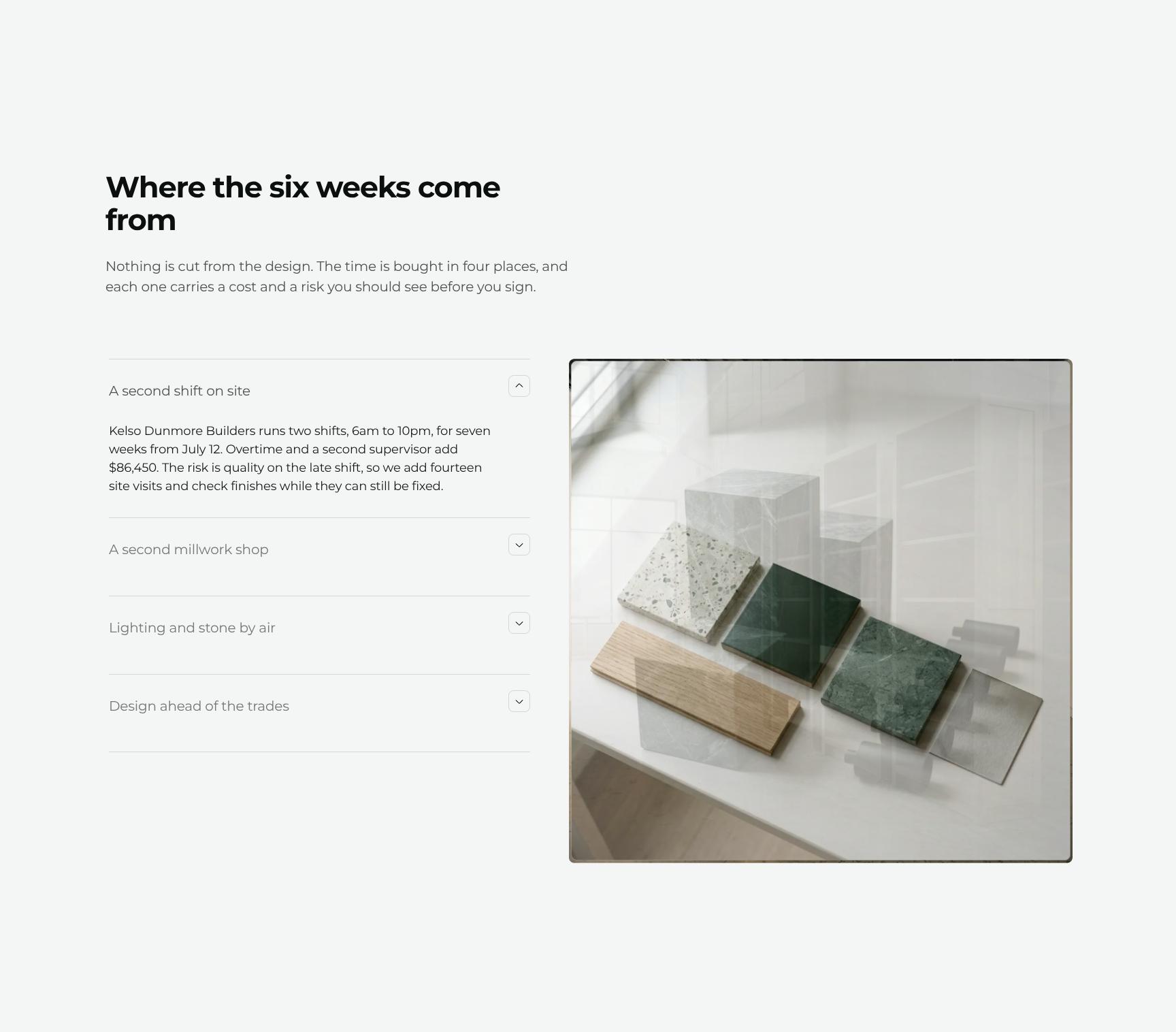
Schedule Compression Breakdown: Where Six Weeks Come From
Shows the four places time is bought, each with its cost and risk, and confirms nothing is cut from the design. Builds trust through transparent trade-offs before signing.

Schedule Risk Statement: Float Reduced to Four Days
A candid callout that six weeks can be bought but float cannot: four working days of float versus twenty-three originally. Sets honest expectations and protects the relationship.
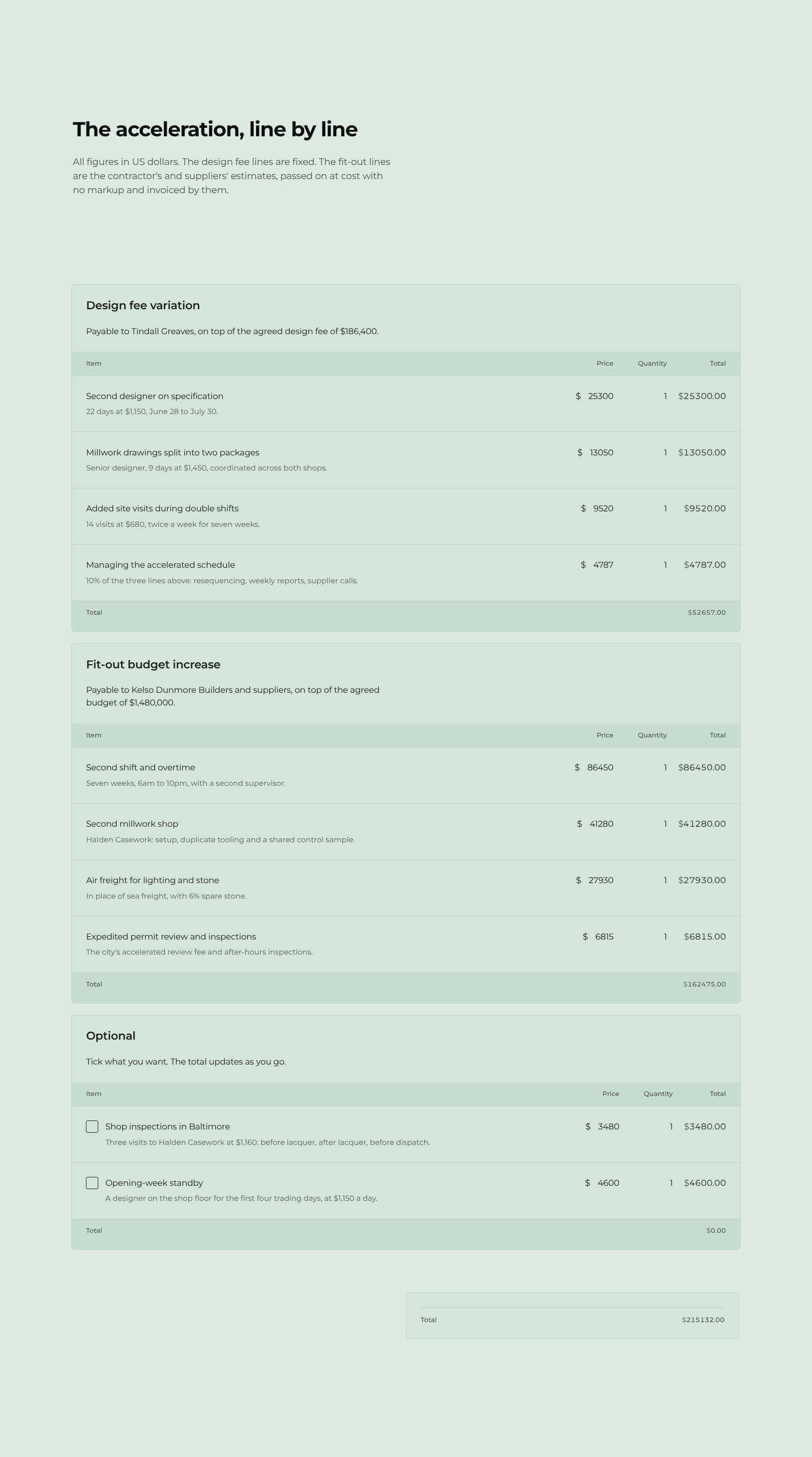
Line-by-Line Acceleration Pricing at Cost
Itemized pricing in US dollars: fixed design fee lines plus fit-out lines from contractors and suppliers, passed on at cost with no markup. Clear, auditable numbers speed up approval.
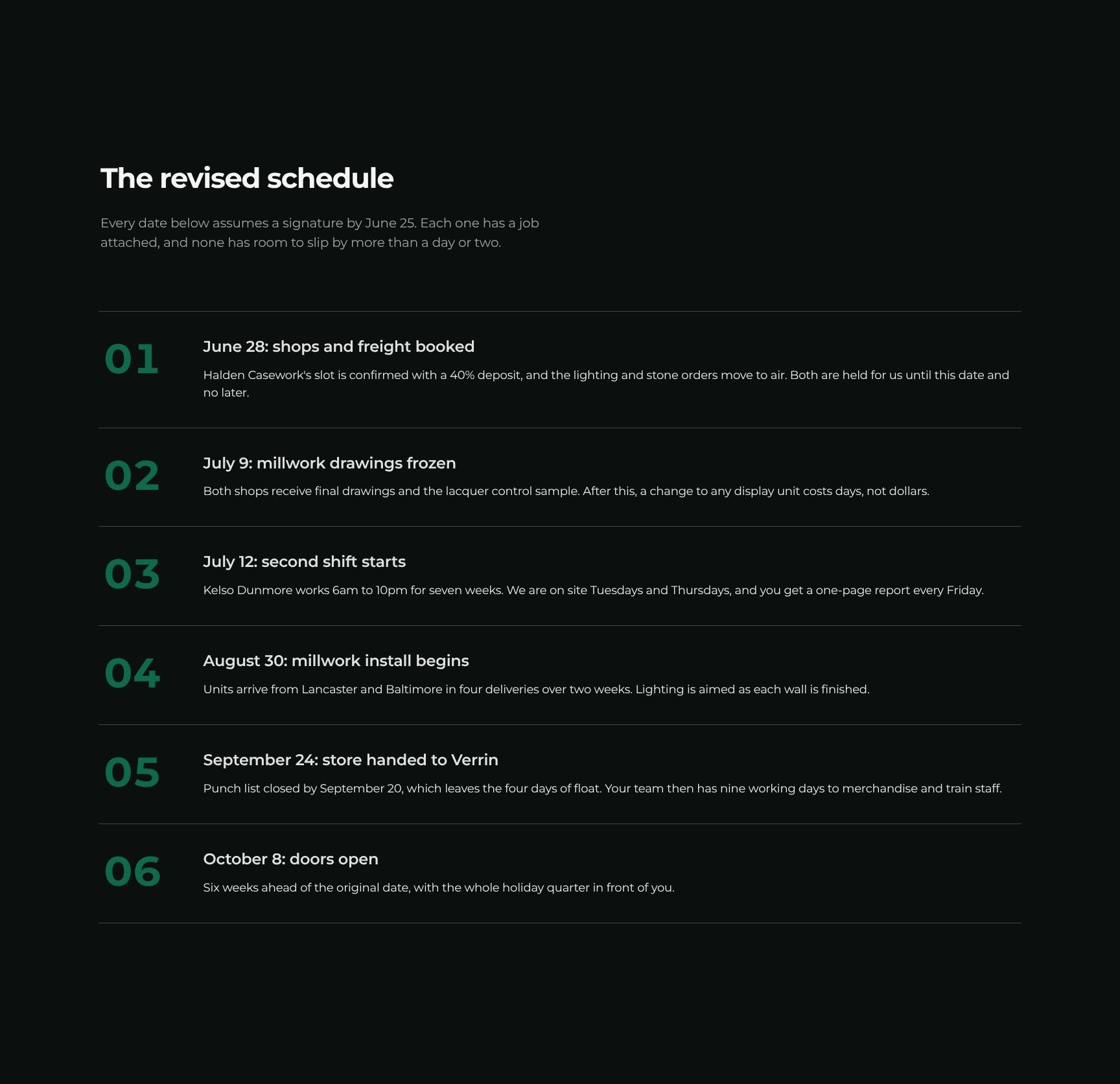
Revised Project Schedule with Milestone Dates
A step-by-step timeline to the October 8 opening, each date tied to a specific task and signature by June 25. Shows how little room there is to slip and what must happen when.
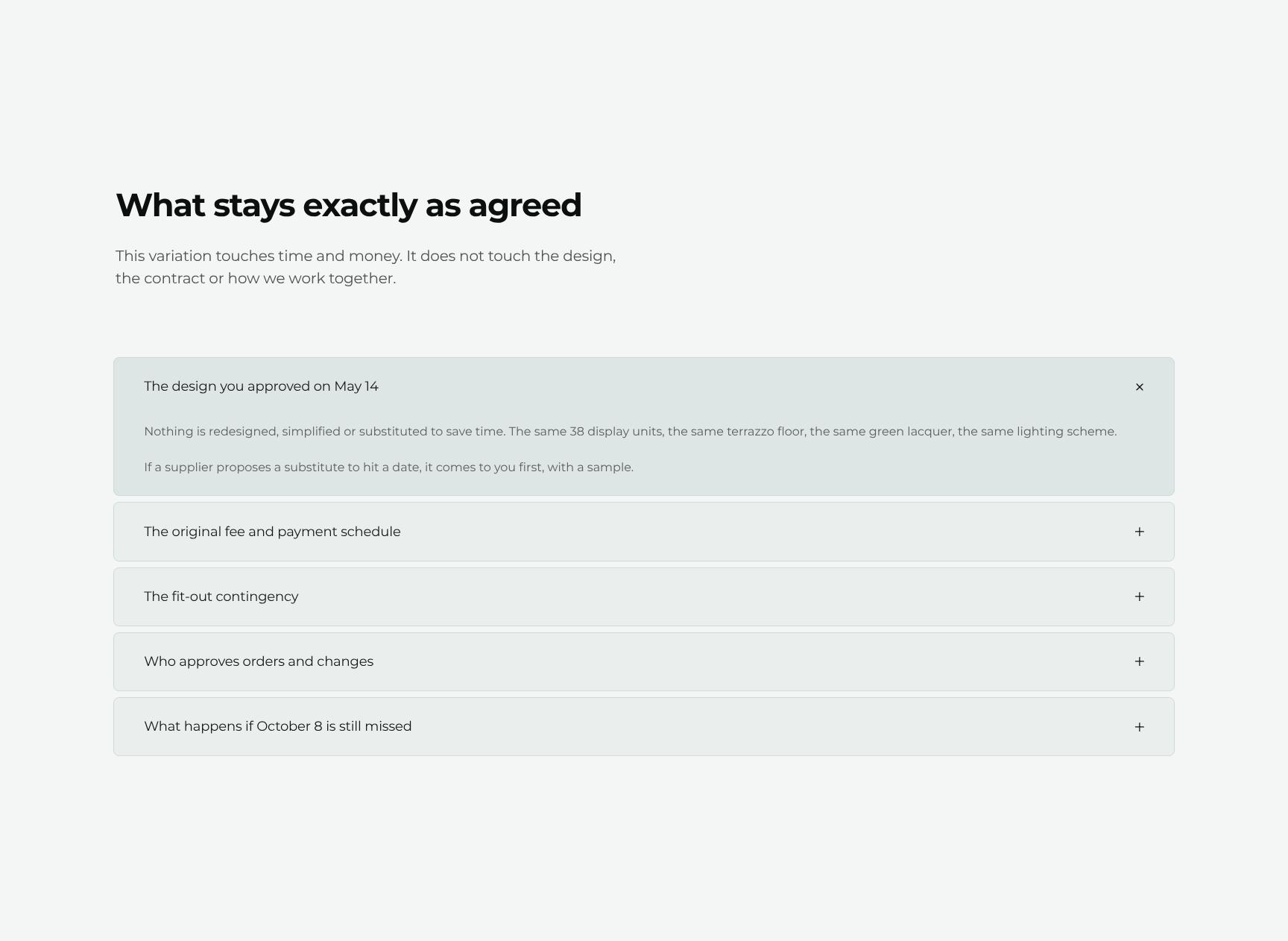
Unchanged Terms: Design, Contract and Working Relationship
An expandable list confirming what the variation does not touch: the design, the contract and how we work together. Reassures clients and limits the scope of the change.
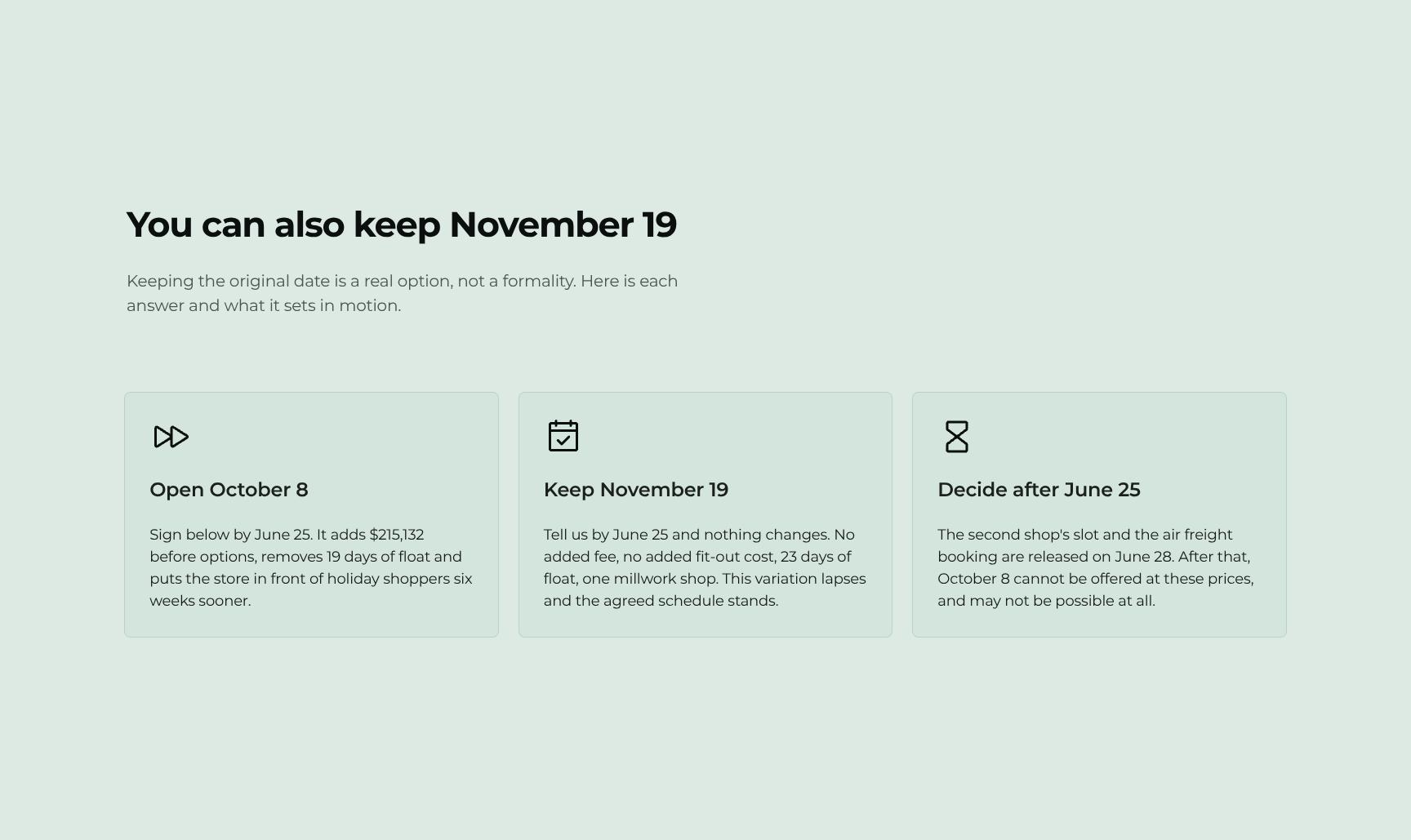
Decision Options: Keep the November 19 Opening
Presents keeping the original date as a real alternative, with what each answer sets in motion. Gives clients choice and confidence that the decision is theirs.
Variation 03 Approval and E-Signature Block
The sign-off for Variation 03: added design fee of $52,657, added fit-out budget of $162,475 and any ticked options, for an October 8, 2027 opening. One signature starts the booking.
Find your answers
Answers to common questions about pricing schedule acceleration and fee variations on retail interior design projects.
A strong proposal includes a cover, a summary of what changed, the impact on the client, where the time or savings come from, the risks involved, and the price. This template covers all six sections in a logical order, so decision-makers can understand the value before they see the cost. Keeping each section short makes the proposal easier to approve.
Start with the cover by adding your client's name, project title, and branding. Then replace the placeholder text in each section, such as What changed, Impact, and The price, with figures and details specific to the client. You can reorder, remove, or add sections to match the scope of the deal.
Yes, you can export the finished proposal to common formats such as PDF for sending to clients and an editable document format for further changes. PDF keeps your layout and pricing intact, while an editable version is helpful when the client wants to give feedback. Always review the exported file to confirm that fonts and spacing look correct.
Use the 'Where the time comes from' section to break the savings into specific steps, such as automated tasks, removed handoffs, or faster approvals. Give each step an estimated number of hours or days saved so that the total is easy to check. Linking each saving to the change you are proposing makes the claim believable.
Yes, the structure of change, impact, time savings, risk, and price works for consulting, software, marketing, operations, and other service projects. You only need to adjust the language and metrics to suit your industry. It's especially useful when you are proposing a process improvement or efficiency gain with a clear return.
Browse more interior design templates
More templates for interior designers pricing fee variations and winning client approval on retail projects.