



Glasgow
Event Statement of Work Template for Light Festivals
Light festival statement of work template with scope, installations, schedule, fee and acceptance criteria for event producers and creative studios.
Make it yours, in seconds
Every template is a starting point. Drag to shift colour, typography and layout — the live preview updates as you move.
Move the dots to shift colour, typography and layout. The preview updates live.
Get more from every document
This template helps you lock down scope, fee, and sign-off for a light festival commission before the first projector is rigged. Inside you get a site model gallery, gated delivery, VAT-clear payments, and e-signature.
Get the deal signed on the page
Your client reads the scope, pricing, and terms, then signs right there. No PDF download, print, or scan.
Build agreements from blocks you trust
Drop in pricing, steps, and terms sections, then save your best-performing agreement layouts to reuse on every new client.
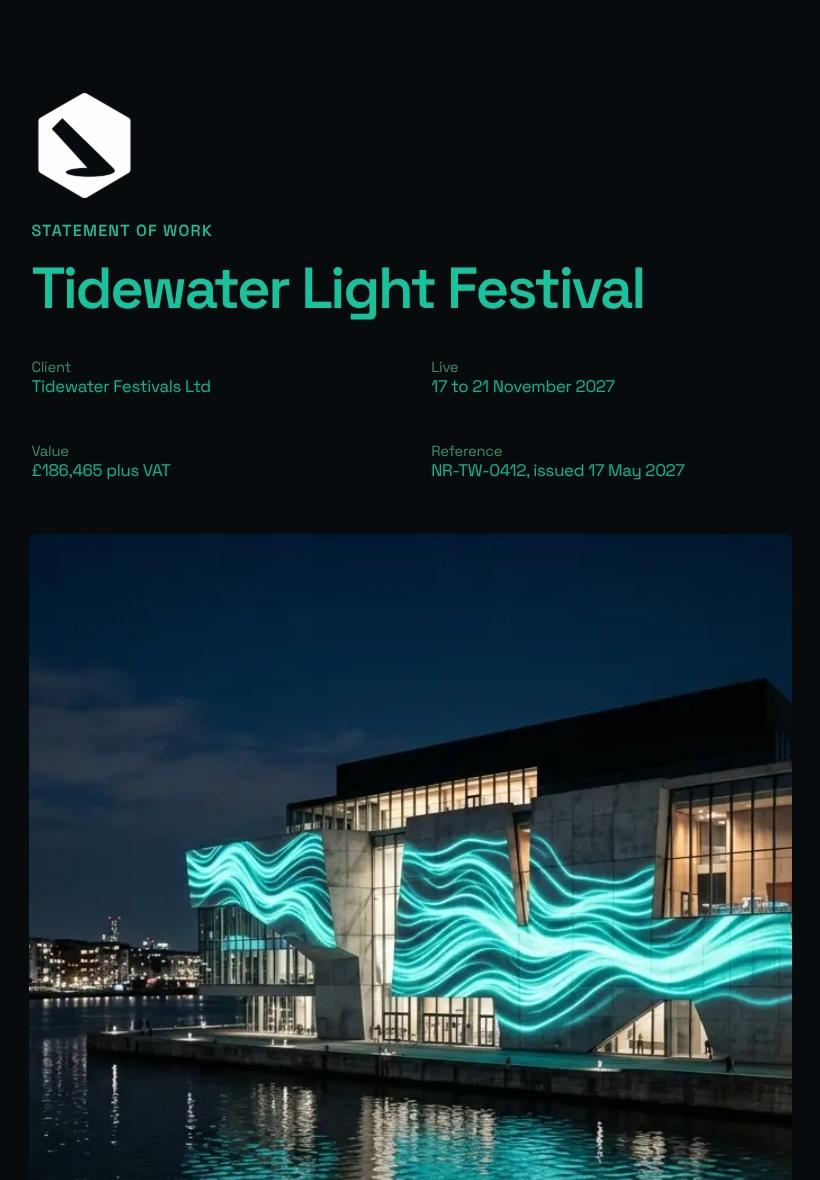
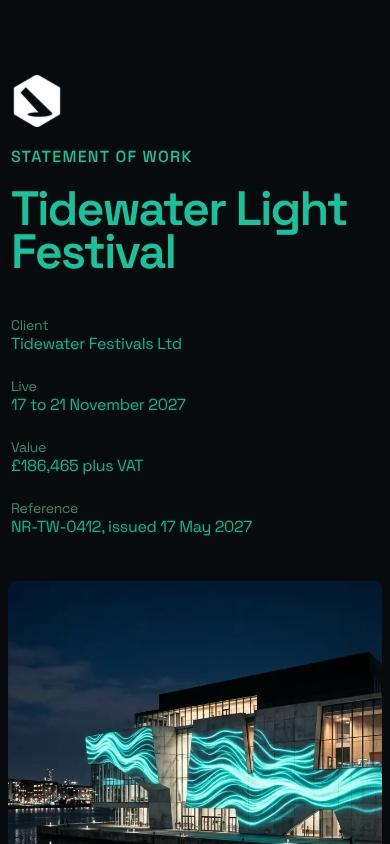
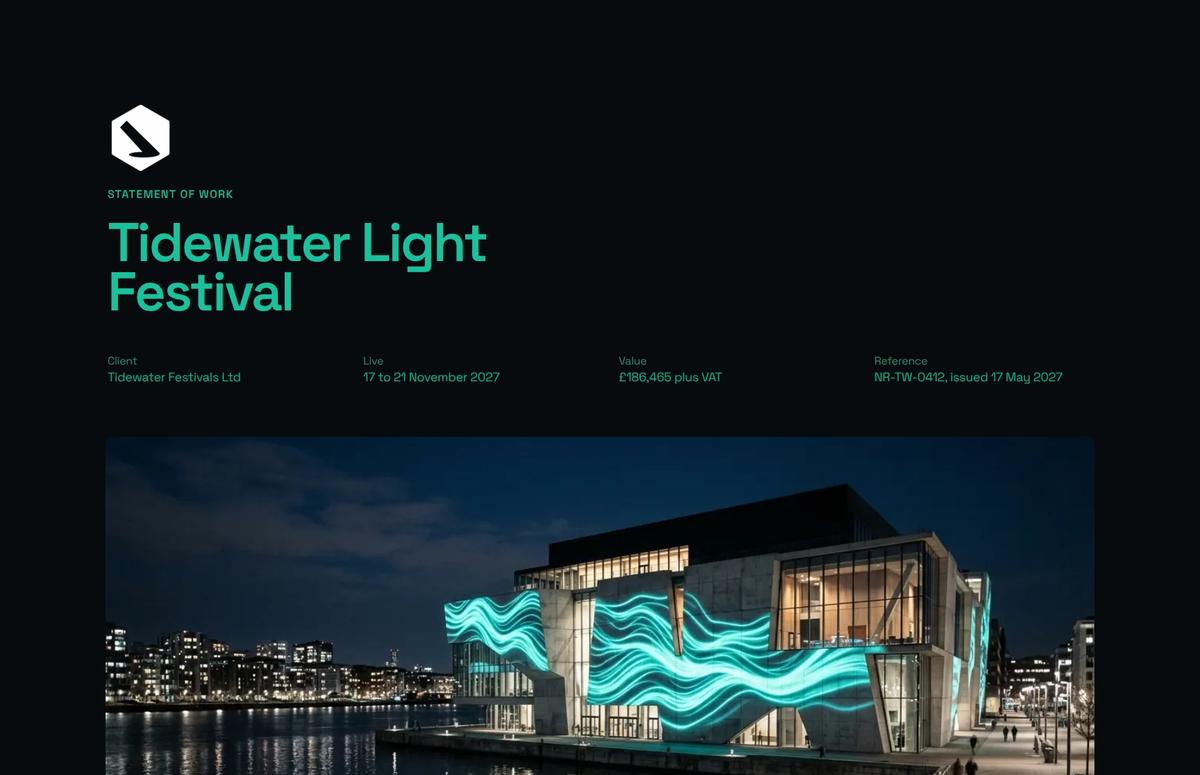
Your agreement reads well on any screen
Clients open it on a phone between meetings and still see clean pricing tables, galleries, and a signature box that works.
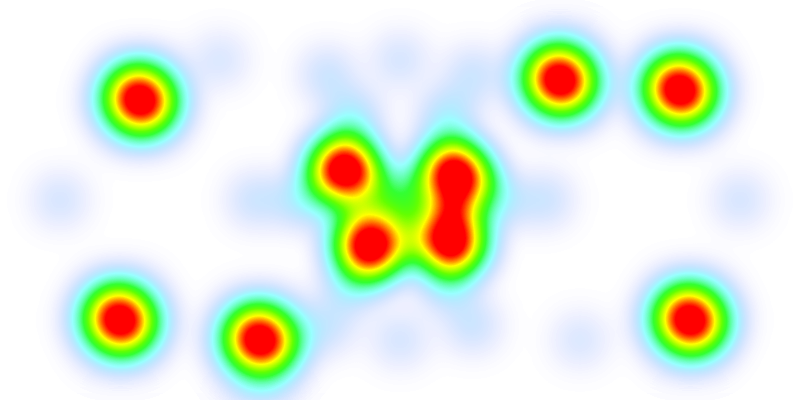
See which terms your client lingers on
Heatmaps show if they stall at pricing or the scope, so you can follow up before doubts turn into silence.
Know the moment they sign
Get pinged when your client opens the agreement, leaves a comment on a clause, or signs, so you can reply fast.
Finish the agreement with your team
Your producer tightens the scope while you adjust pricing, both in the same document, before it goes to the client.
See how every part fits
The document opens with the client, dates, and contract value, then moves through installations, schedule, and fees, and closes with a signature and a projector booking. Keep, drop, or reorder anything to fit your commission.
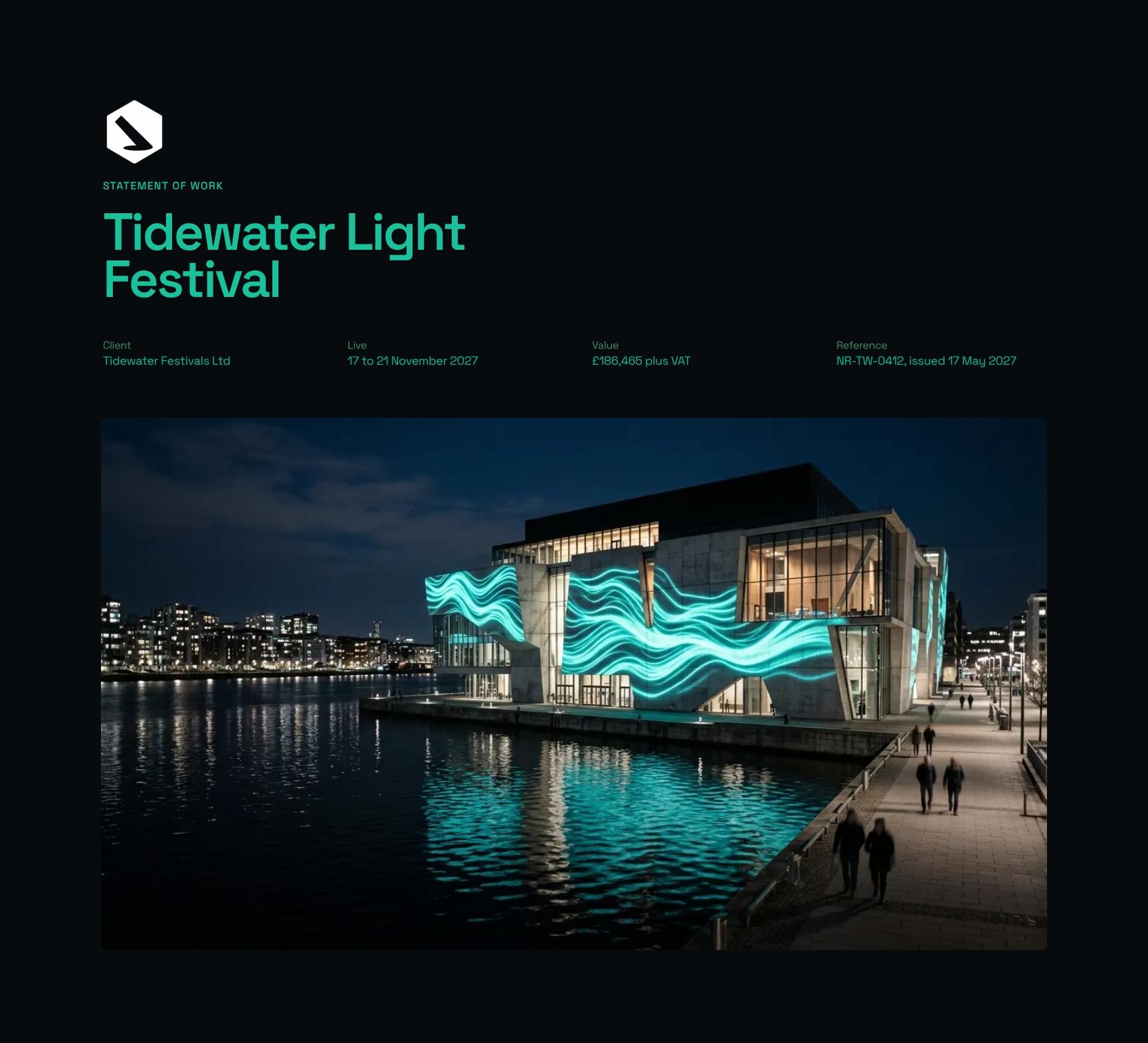
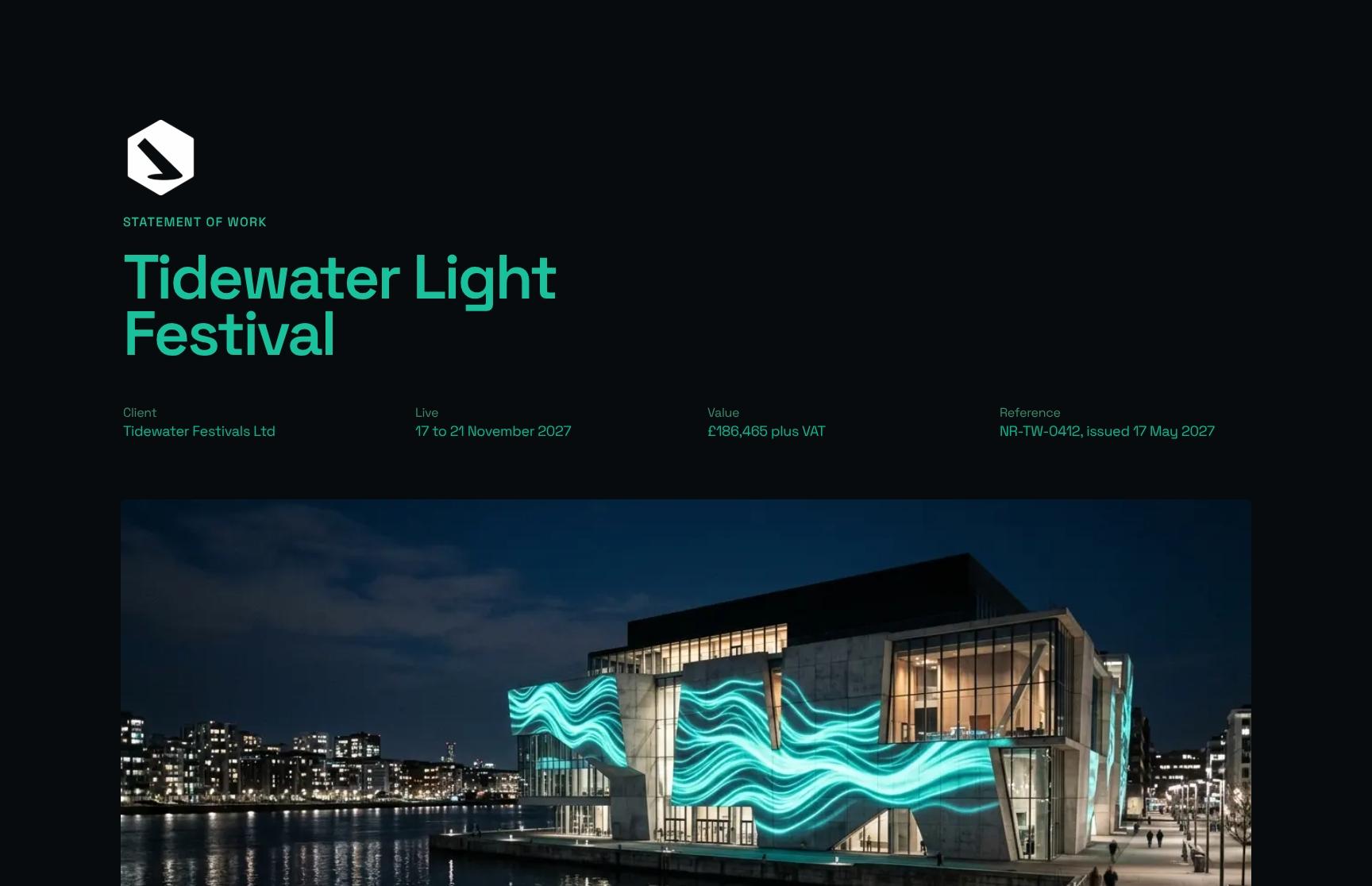
Statement of Work Cover Page with Client, Dates and Contract Value
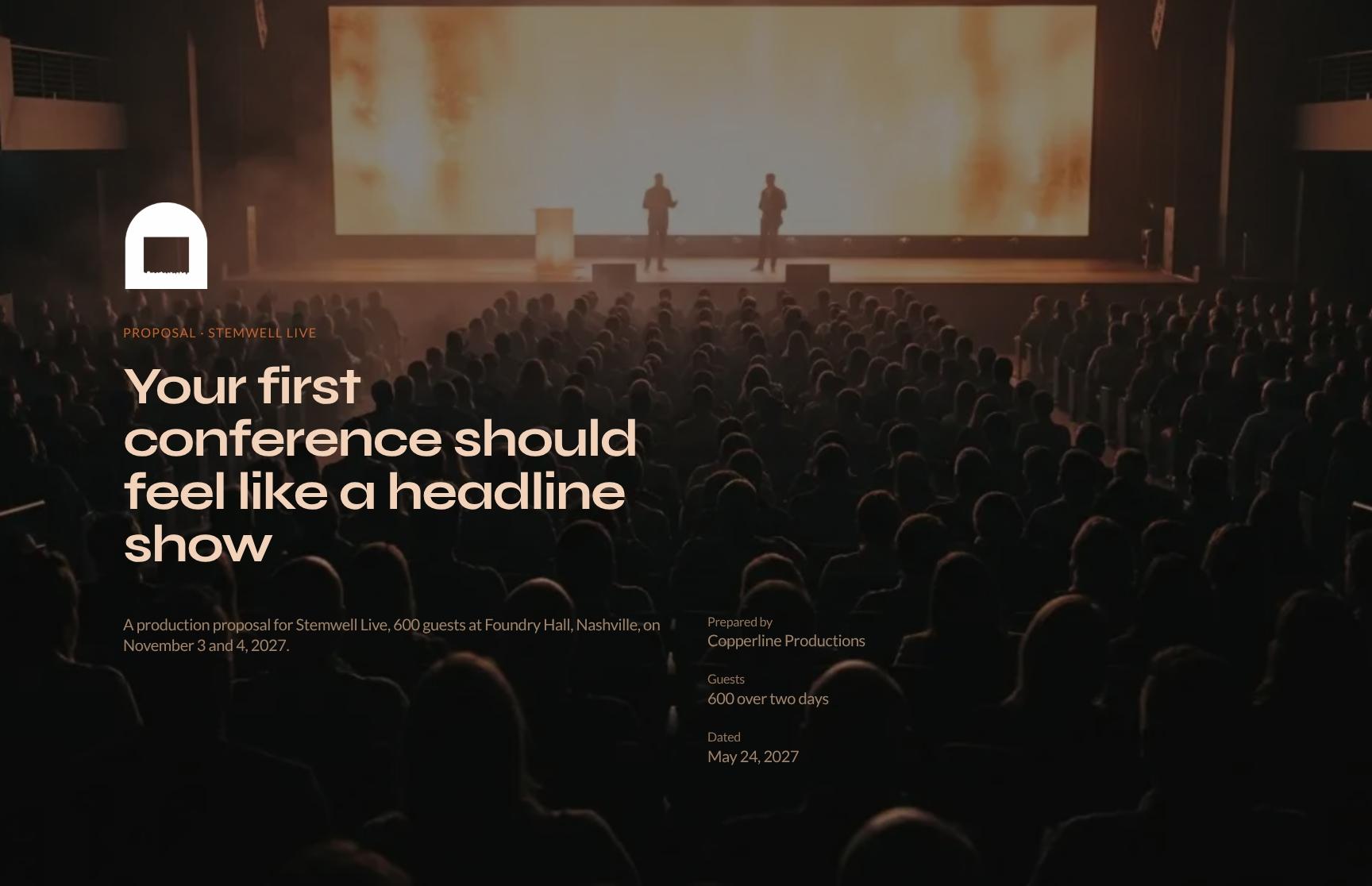
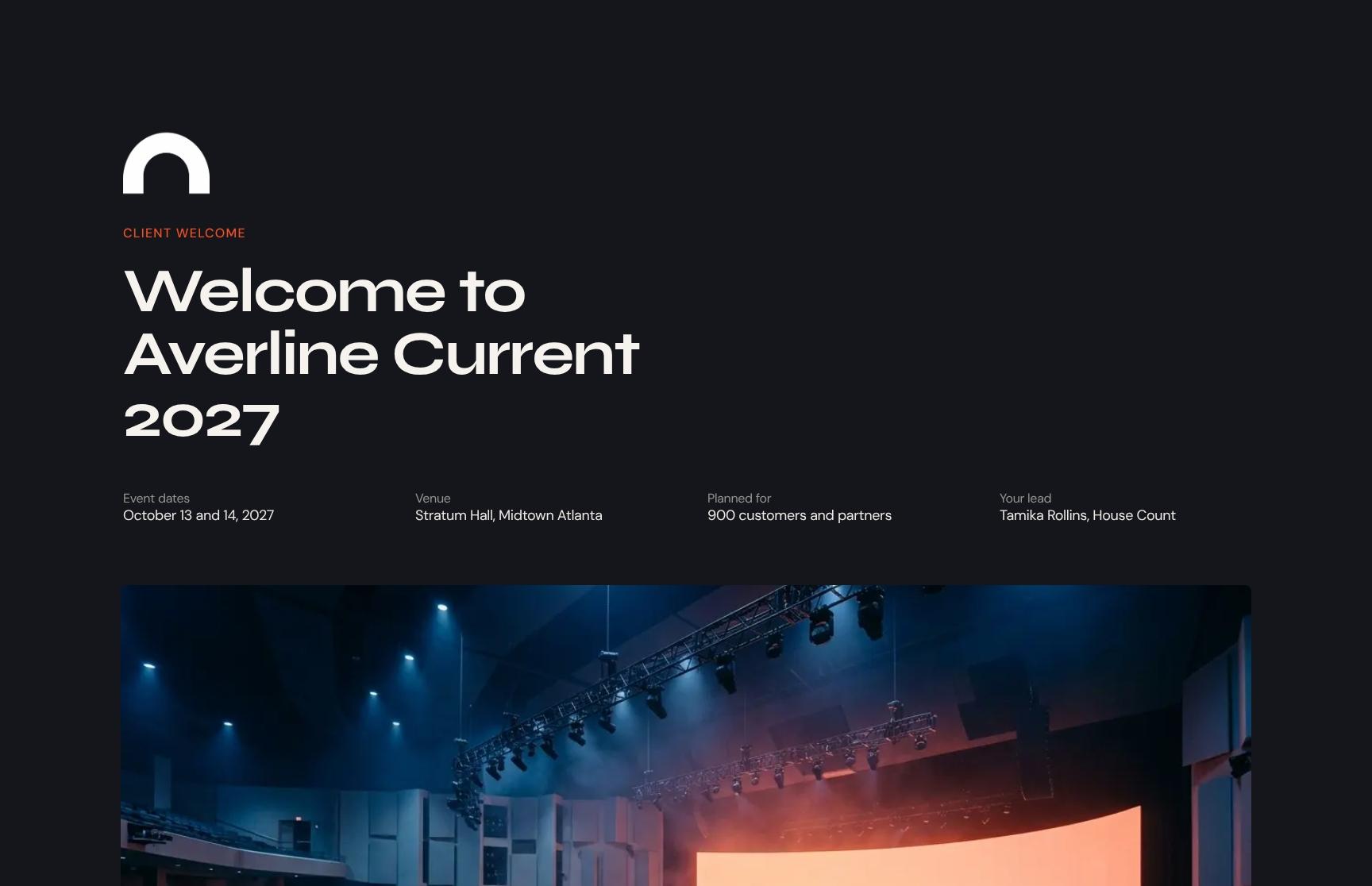
Opens the agreement with project name, client, live event dates and total fee at a glance. Gives both parties instant clarity on what is being bought, for whom, and at what value before they read further.
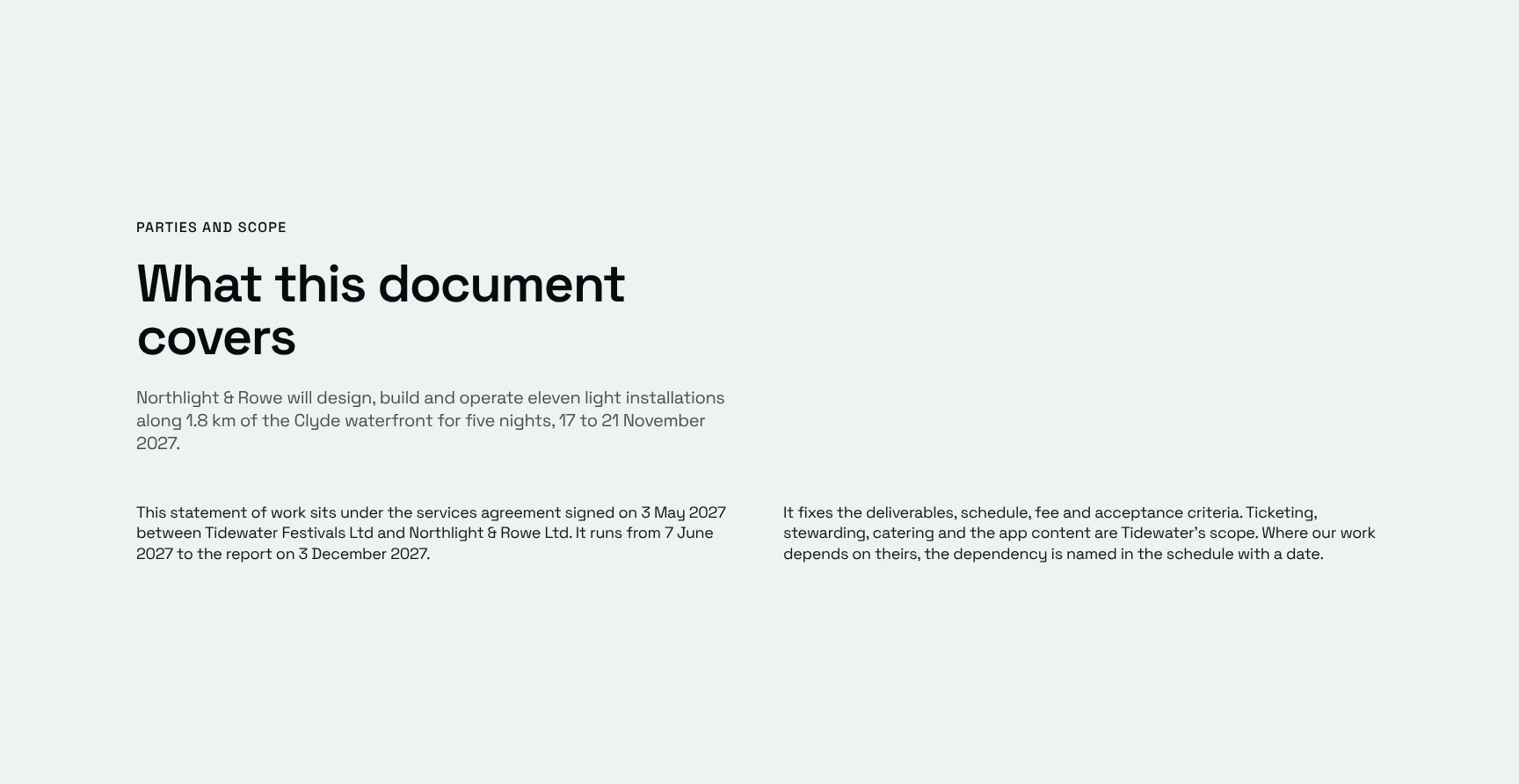
Parties and Scope of Work Overview
Defines who is contracting and exactly what will be designed, built and operated: eleven light installations along 1.8 km of waterfront over five nights. Sets clear boundaries to prevent scope creep and disputes.
Guiding Principle Statement for Installation Delivery
A short, animated statement that frames the project promise: eleven installations, five nights, no fixings into the quay wall. Memorably communicates the key constraint and builds client confidence.
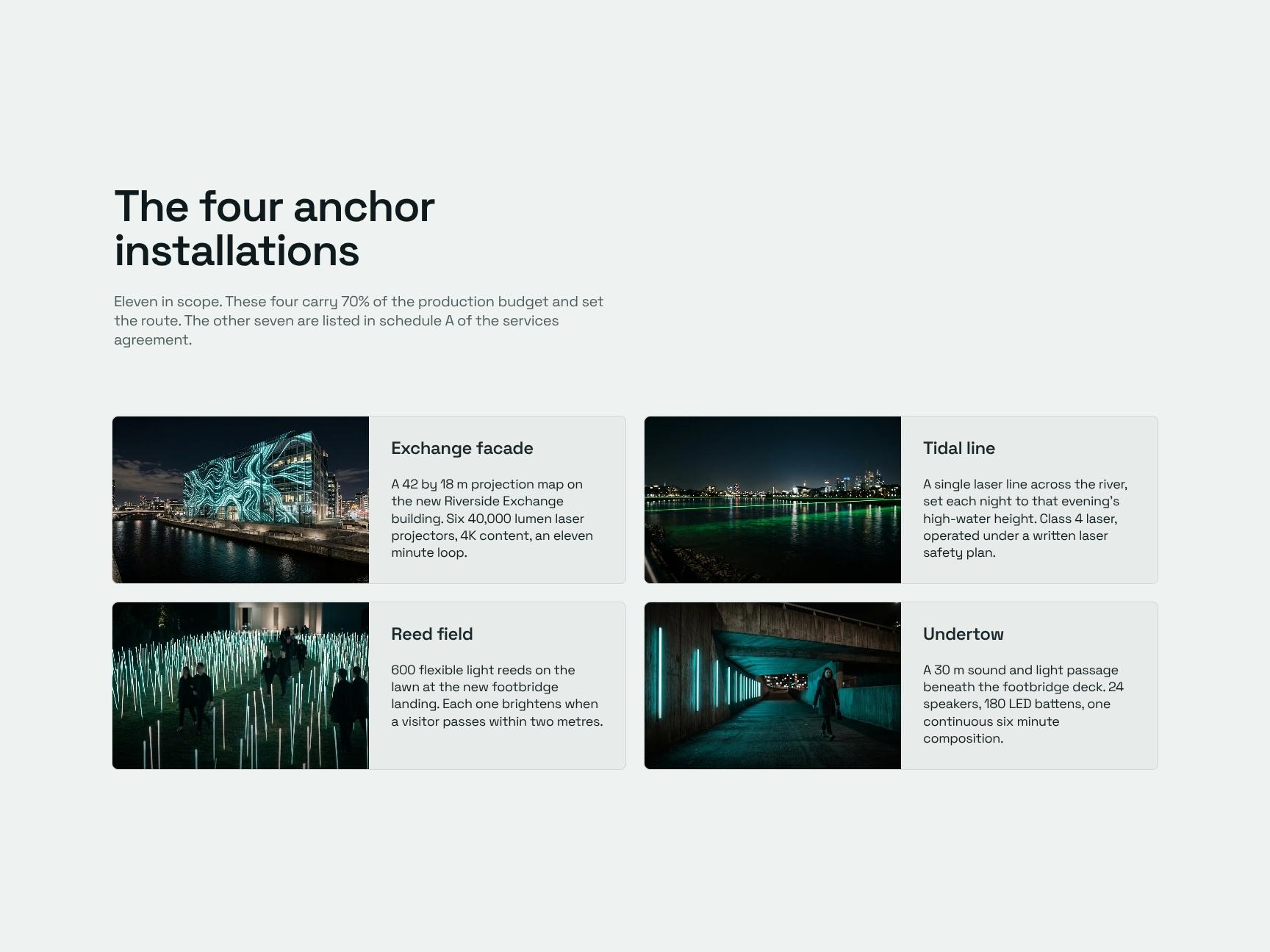
Anchor Installations and Key Deliverables
Cards detailing the four anchor installations that carry 70% of the production budget and set the festival route. Shows clients where the money goes and points to the remaining seven in the services agreement schedule.
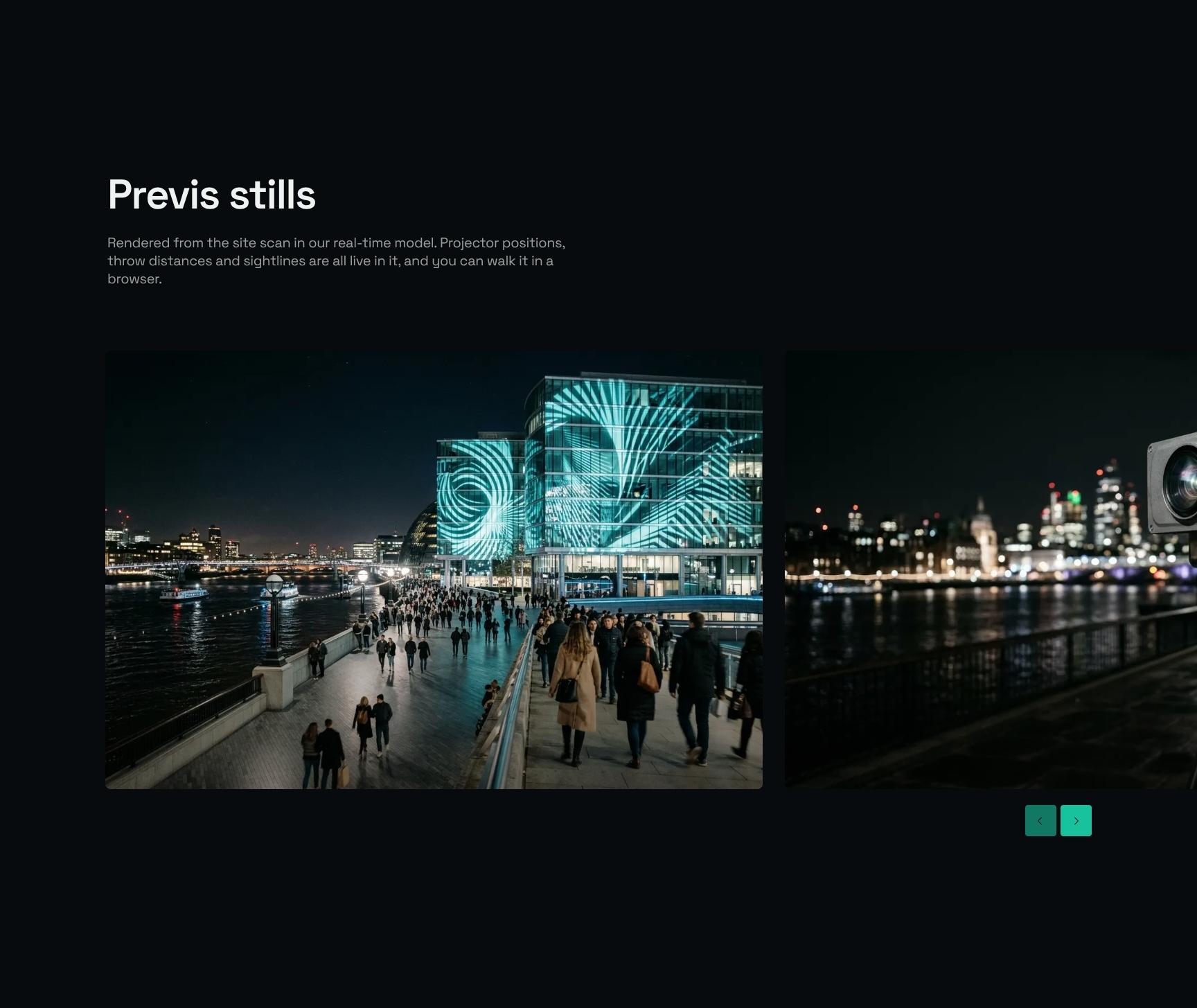
Previsualisation Gallery with Real-Time Site Model
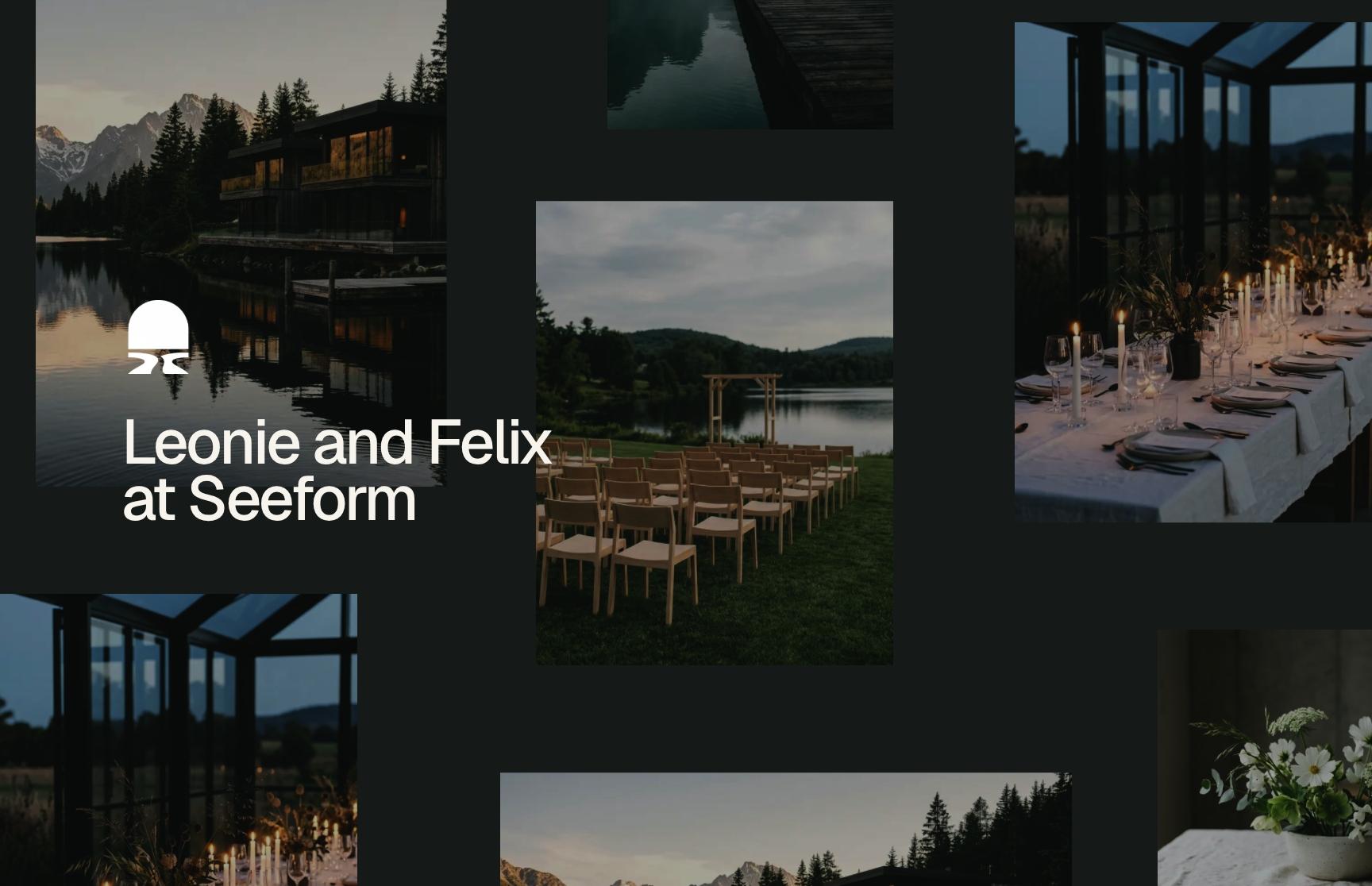
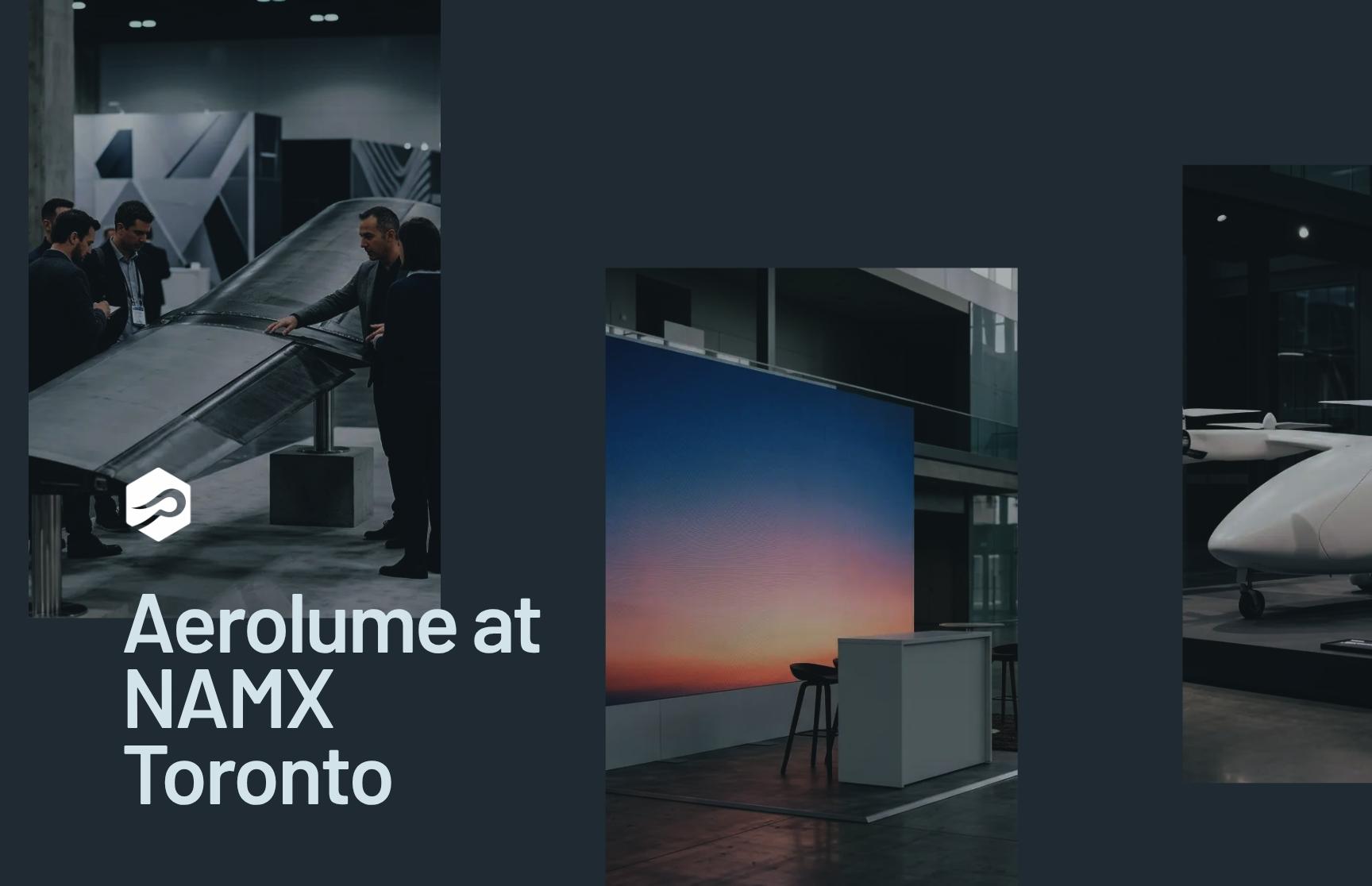
Rendered stills from the site scan showing projector positions, throw distances and sightlines. Lets clients see the finished result, and explore the live model in a browser, before approving the build.
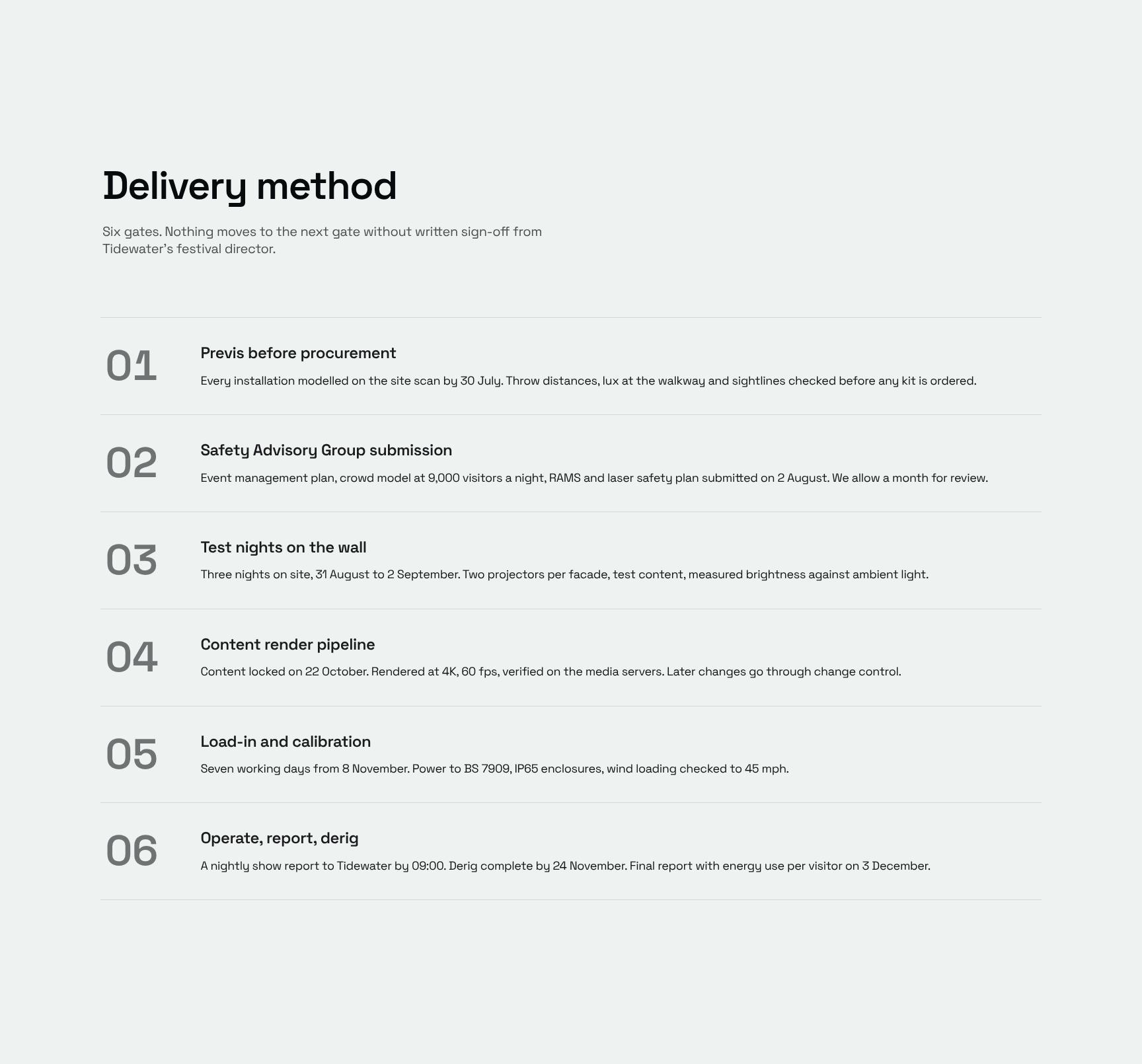
Six-Gate Delivery Method with Written Sign-Off
A step-by-step delivery process where each of six gates needs written approval from the festival director. Gives the client control, creates an audit trail and keeps the project accountable.
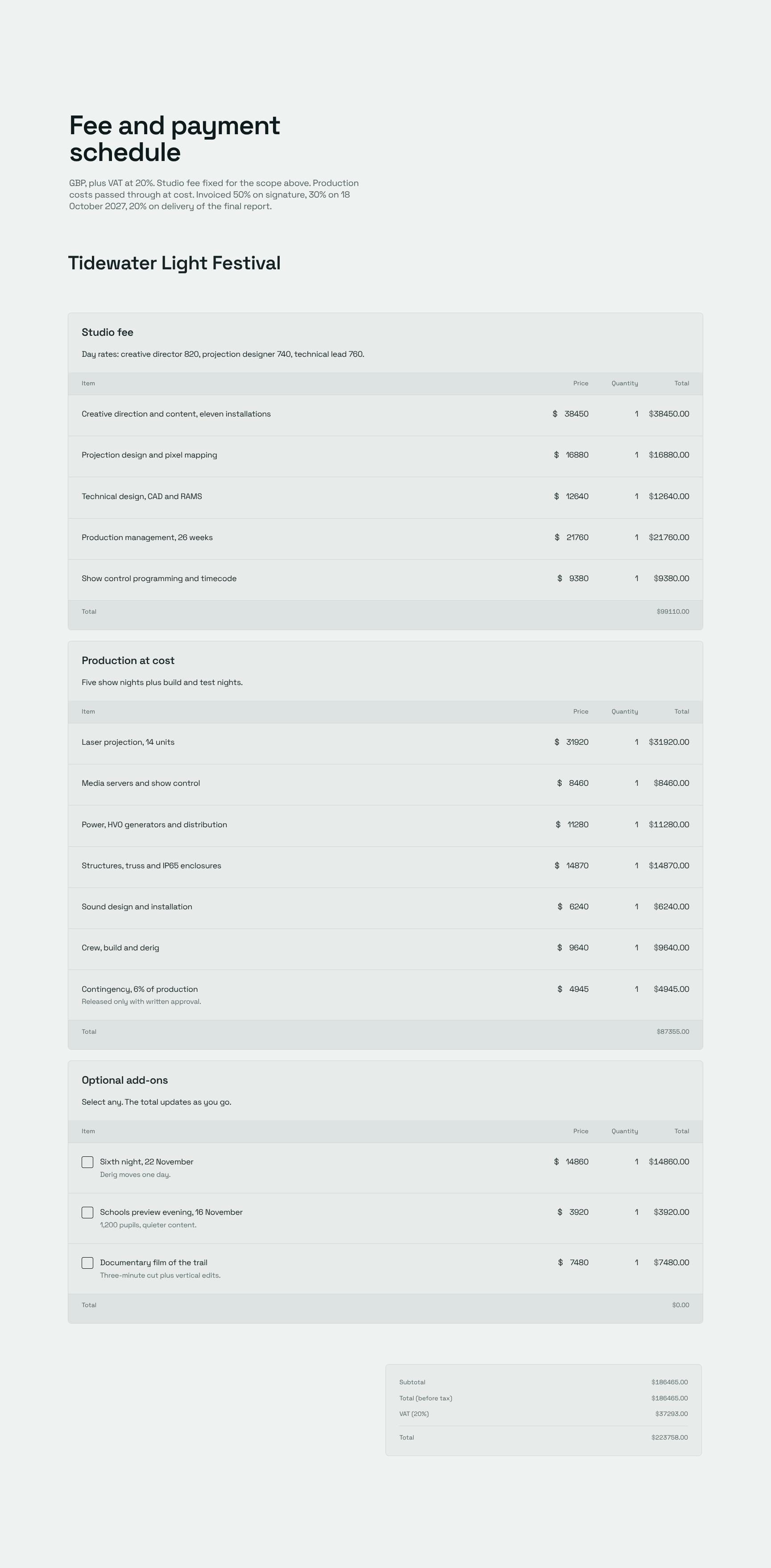
Fixed Fee and Payment Schedule with VAT Breakdown
Transparent GBP pricing: fixed studio fee, production costs passed through at cost, plus 20% VAT. Staged invoices of 50%, 30% and 20% tied to signature, a set date and final report make budgeting simple.
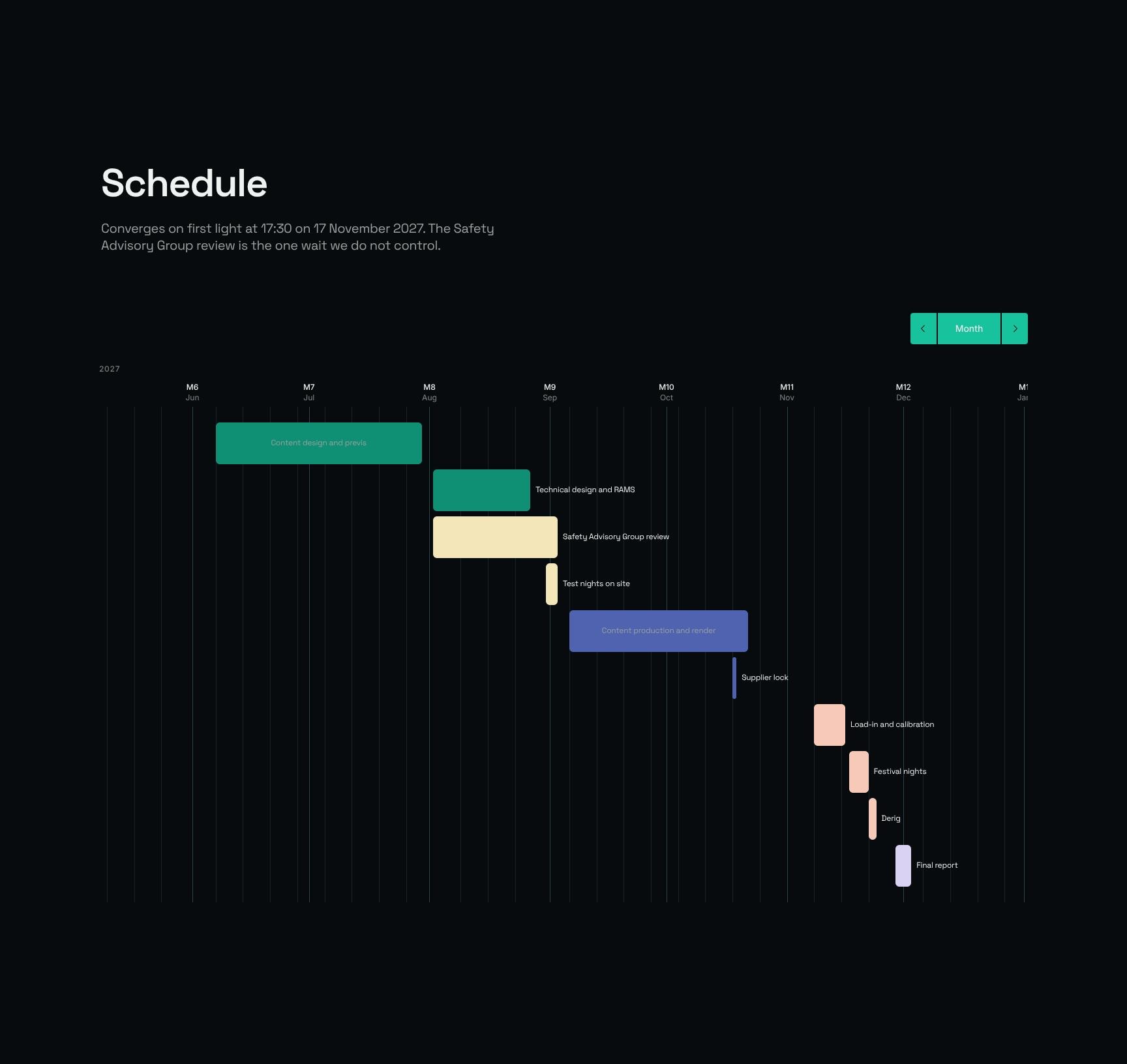
Project Schedule and Milestones to First Light
A task timeline converging on first light at 17:30 on 17 November 2027. Flags the Safety Advisory Group review as the one external dependency, so both sides can plan around it.
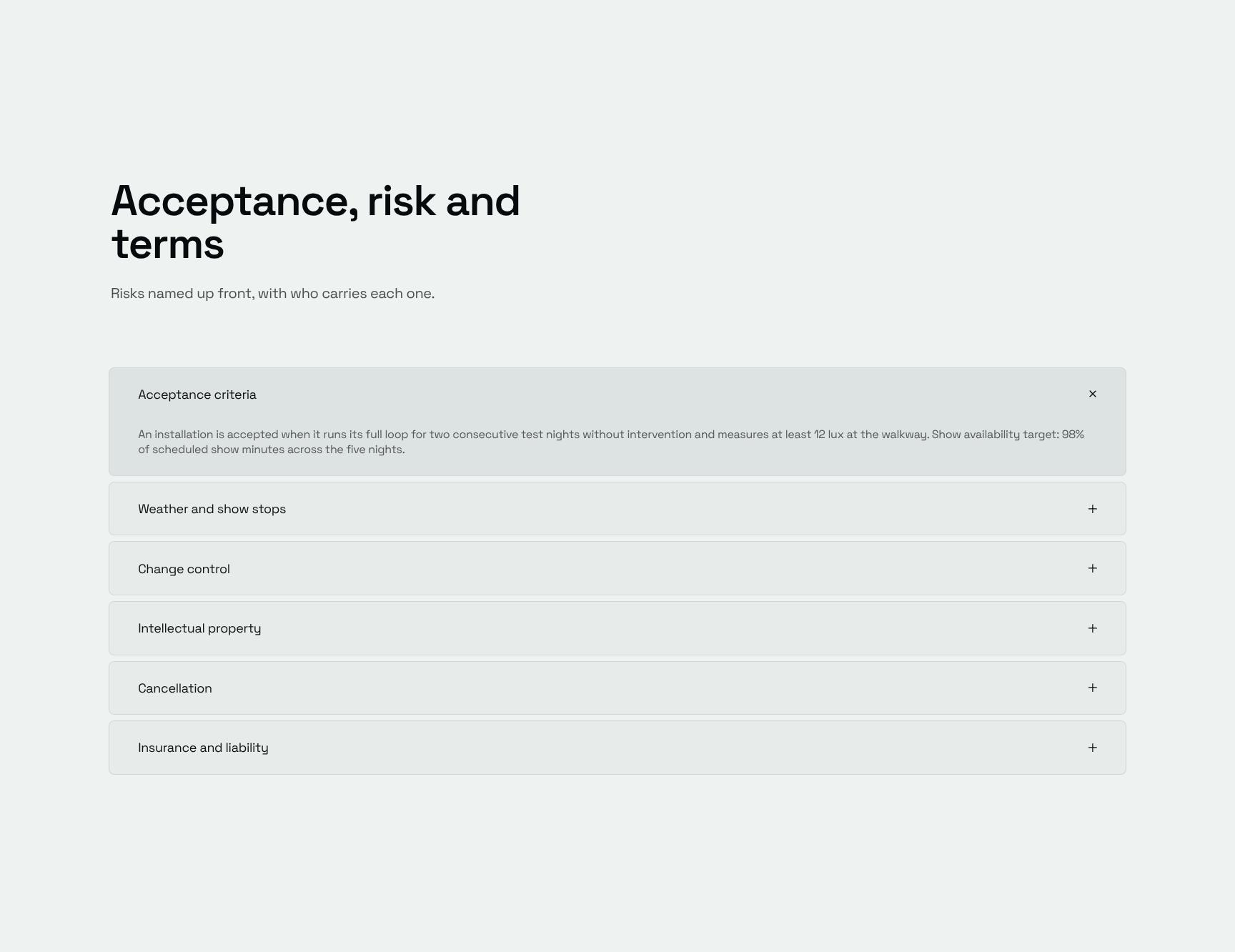
Acceptance Criteria, Risk Allocation and Contract Terms
Expandable terms covering how installations are accepted, such as two consecutive successful test nights, and which party carries each named risk. Makes legal detail easy to scan and reduces later disagreement.
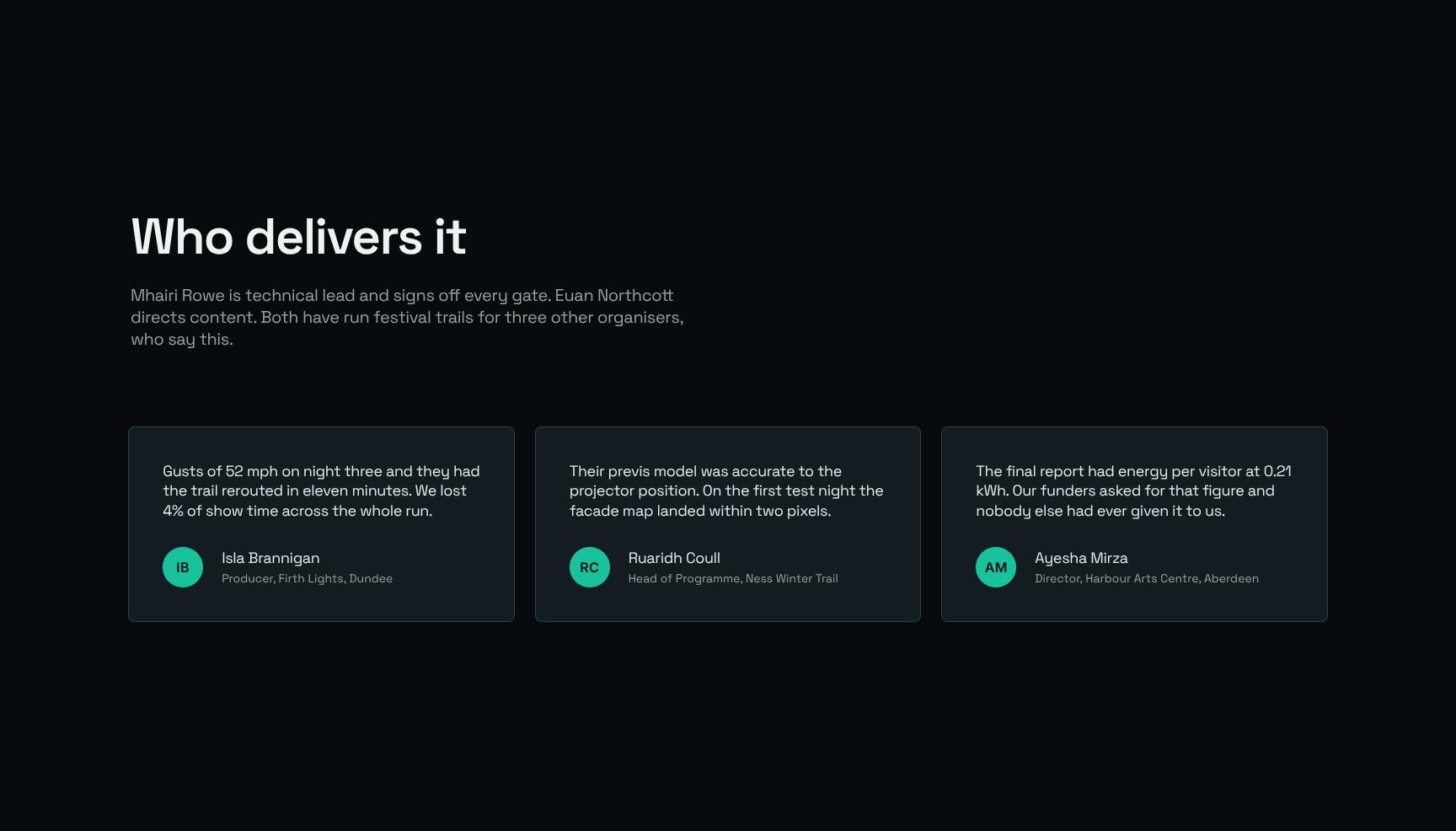
Delivery Team Profiles and Festival Track Record
Introduces technical lead Mhairi Rowe and content director Euan Northcott, with endorsement from three other festival organisers. Builds trust by showing who signs off each gate and their proven experience.
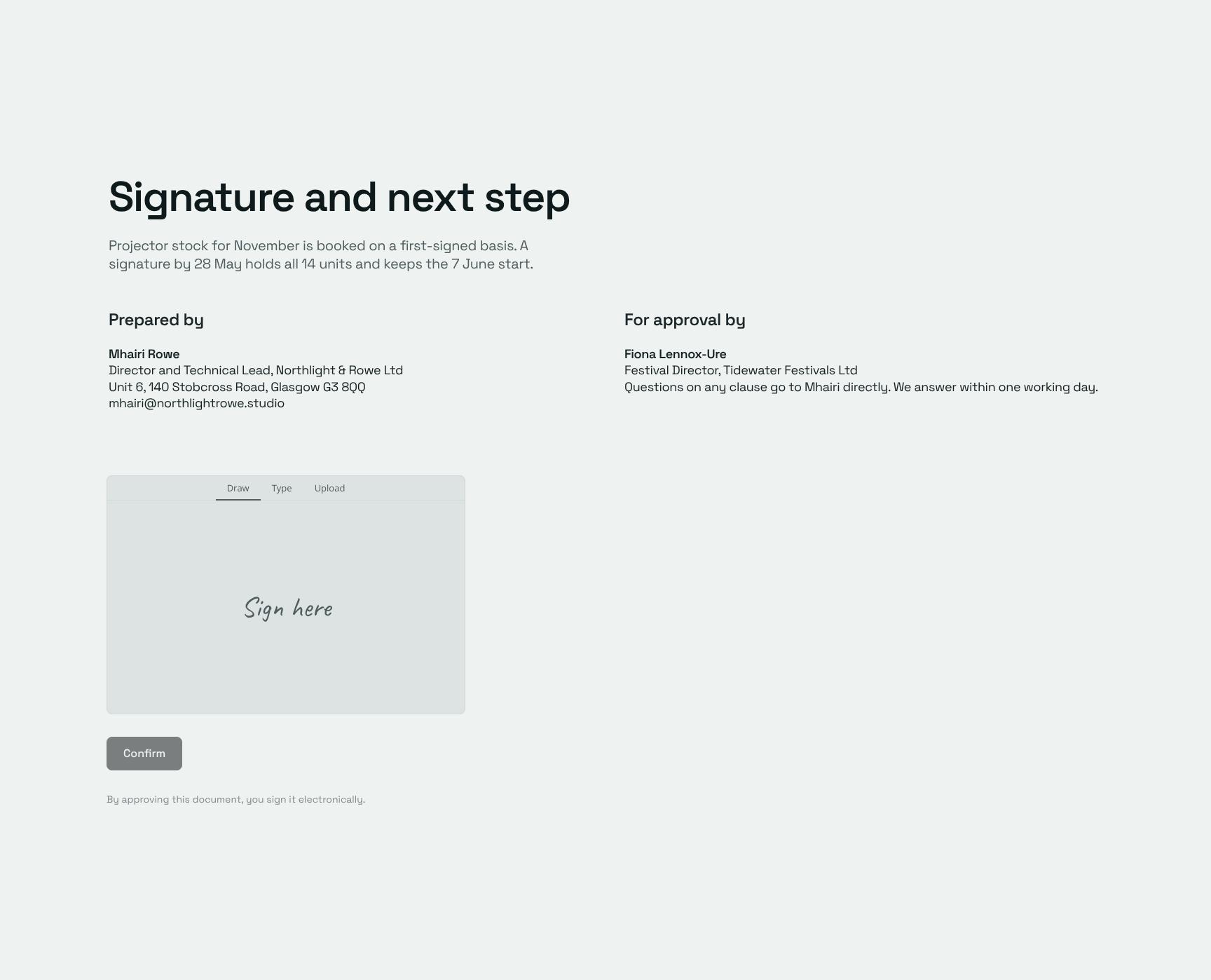
E-Signature and Projector Booking Next Step
Closes with a clear call to action: sign by 28 May to hold all 14 projector units and keep the 7 June start. The urgency of first-signed booking encourages prompt approval and starts the project.
Find your answers
Answers to common questions about writing a statement of work for light festival installations, from scope and fees to acceptance and sign-off.
A previs agreement should include a cover page, the scope of work, the guiding principle behind the collaboration, a detailed list of deliverables, the previsualization requirements, and the delivery method. Together these sections define what will be produced, how it will be reviewed, and how final files reach the client. Clear definitions reduce disputes and scope creep.
Start by replacing the cover details with your project name, parties, and dates. Then edit the Scope and Deliverables sections to list your specific shots, sequences, or animatics, and update the Previs section with revision limits and approval steps. Finish by choosing a delivery method that matches your pipeline, such as cloud transfer or secure download link.
List every item the client will receive, such as animatics, shot-by-shot camera layouts, rendered video files, 3D scene files, and shot lists. Specify the quantity, resolution, frame rate, file format, and due date for each deliverable. Being specific prevents misunderstandings about what is included in the fee.
Yes, the structure works for any project that uses previsualization, including feature films, TV series, commercials, animation, and game cinematics. The Scope and Deliverables sections can be adapted to each medium's requirements. For projects with unique legal needs, such as union rules or complex IP ownership, have an attorney review the final version.
The Delivery method section lets you specify how files are handed over, such as cloud storage links, FTP or SFTP, review platforms, or physical drives. You can also define file formats like MP4 or MOV for video and FBX or Alembic for 3D assets, along with delivery deadlines and who is responsible for transfer costs. Stating these details up front ensures the files are compatible with the client's editing and production software.
Browse more events & experiential templates
More agreement templates for event producers and creative studios who deliver installations, exhibitions, and live productions.